2026 Best FM Transmitters for Global Buyers
Choosing among the 2026 best Fm Transmitters requires more than comparing wattage and price. Global buyers must examine frequency stability, audio performance, cooling design, service access, and regional certification requirements. A transmitter may look powerful on paper, yet perform poorly in a hot studio or remote broadcast room.
Edwin H. Armstrong, the pioneer of frequency modulation, observed, “The static is the characteristic of amplitude modulation.” His work reminds buyers why FM engineering still depends on clean signal design, stable components, and careful installation. Modern Fm Transmitters add digital controls, remote monitoring, efficient amplifiers, and compact rack formats. However, advanced features cannot replace sound engineering. Sometimes, simpler equipment works better.
This guide evaluates models for community stations, educational broadcasters, commercial operators, and international projects. It considers output power, coverage expectations, input flexibility, thermal protection, maintenance needs, and manufacturer support. Practical details matter. A bright display helps in a dark rack. Tool-free filter access saves time during maintenance. Reliable manuals reduce costly mistakes.
No single model fits every country or application. That limitation deserves attention. Local spectrum rules, electrical standards, import requirements, and approved operating frequencies can change the buying decision. Buyers should confirm these details with qualified professionals before purchase. Product specifications may also vary between regions and production batches. This guide uses available technical documentation, engineering principles, and buyer-focused comparisons to create a practical starting point. It is not a substitute for field testing. The best choice remains the one that balances dependable performance, lawful operation, serviceability, and long-term value.
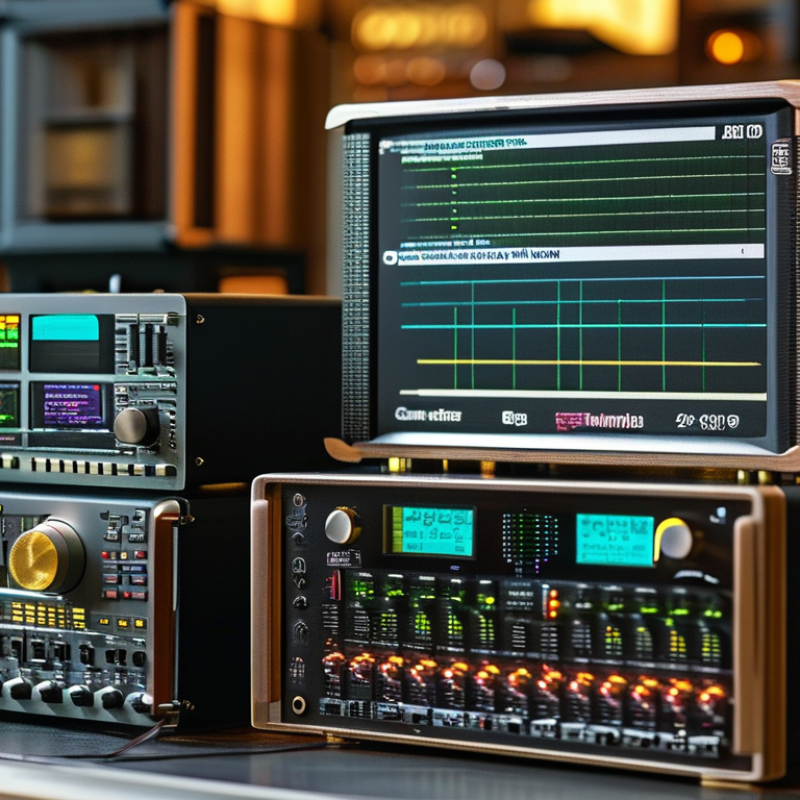
FM Transmitters Explained: Types, Functions, and Core Technologies
2026 Best FM Transmitters for Global Buyers
FM transmitters convert an audio program into a controlled radio-frequency signal. Their basic path includes audio processing, frequency generation, modulation, amplification, filtering, and antenna output. A stable phase-locked loop keeps the carrier on frequency, while digital signal processing manages loudness, stereo separation, and optional data services.
Different transmitter types serve different operating conditions. Low-power exciters suit laboratory tests or small coverage areas. Integrated solid-state transmitters combine the exciter, amplifier, control panel, and protection circuits. Higher-power systems use modular amplifiers, making maintenance easier when one module requires service. Heat matters. Fans, airflow, and cabinet design strongly affect long-term reliability, especially in hot or dusty sites.
A practical buyer should check output power, frequency stability, efficiency, cooling, remote monitoring, and reflected-power protection. A clear display helps during nighttime adjustments. Measurements with a calibrated wattmeter and spectrum analyzer reveal problems that product sheets may hide. The “best” unit is not universal. Antenna height, cable loss, terrain, electricity quality, and local technical rules can change the result. Even careful planning may miss installation faults. Recheck grounding, ventilation, and connector torque before judging performance. Frequency assignments, emissions limits, equipment certification, and operator permissions must be verified in each target country.

Key Specifications for Comparing FM Transmitters Worldwide
2026 Best FM Transmitters for Global Buyers
Key Specifications for Comparing FM Transmitters Worldwide
Comparing FM transmitters requires more than reading output power. Check frequency stability, audio performance, efficiency, and cooling design. A stable oscillator helps maintain clear coverage during long operating hours. Digital modulation accuracy also affects loudness, clarity, and listener comfort. Ask for measured data, not only advertised maximum values.
Power ratings need careful attention. A transmitter rated at 1,000 watts may not deliver the same performance in every installation. Confirm continuous output, electrical consumption, voltage range, and connector type. Regional power systems differ. Built-in protection should monitor temperature, reflected power, voltage, and fan failure. These details reduce avoidable downtime.
Compliance is equally important for global buyers. Verify local frequency rules, certification requirements, electromagnetic limits, and installation permissions before purchasing. Remote monitoring can simplify maintenance across distant sites. However, network access must use strong authentication and controlled permissions. During evaluation, request test reports, service procedures, spare-part availability, and warranty terms. Documentation often reveals more than a polished sales page.
Field conditions can change the result. Heat, dust, poor grounding, and unstable electricity may reduce reliability. I would test the equipment with the intended antenna system, not a laboratory load alone. Some comparisons remain imperfect because manufacturers measure performance differently. A clear testing method makes the final decision more defensible.
Best FM Transmitter Categories for Different Broadcasting Needs
2026 Best FM Transmitters for Global Buyers
Best FM Transmitter Categories for Different Broadcasting Needs
Low-power FM transmitters suit schools, community stations, event venues, and campus networks. Their compact chassis fits a shallow rack, while output levels often range from 1 to 100 watts. The ITU-R BS.412 recommendation emphasizes frequency planning, protection ratios, and field-strength control. Buyers should therefore check local channel spacing before choosing an exciter. A clean signal matters more than impressive wattage.
Medium-power transmitters, commonly rated from 300 watts to 5 kilowatts, support regional coverage and relay sites. They need efficient cooling, stable frequency control, and remote monitoring. The FCC’s FM rules show how power, antenna height, and service contours work together, although national limits differ. A taller antenna may outperform a larger transmitter. That detail is often missed.
High-power systems serve wide-area broadcasters and usually require redundant power supplies, liquid or forced-air cooling, and automatic fault alarms. Industry research from Grand View Research projects continued growth in the global broadcast equipment market through the decade, driven by network upgrades and digital workflow integration. Still, market forecasts are not guarantees. Rural terrain, electricity quality, maintenance skills, and licensing conditions can change the correct category completely. A practical site survey should come before procurement.
Global Compliance, Frequency Planning, and Safety Considerations
Choosing an FM transmitter for global deployment requires more than comparing power ratings. Each market may require local type approval, frequency coordination, and documented electromagnetic compatibility. Rules vary.
A reliable planning process begins with the intended coverage area, antenna height, terrain, and available channels. I recommend checking the national spectrum authority before purchasing hardware. A frequency that appears clear in one city may interfere with licensed services across a border. Leave margin. Accurate field measurements are better than assumptions.
Safety deserves equal attention. Confirm the transmitter’s rated output, cooling requirements, grounding method, and enclosure protection. Installers should calculate RF exposure near the antenna and restrict access to hazardous areas. Proper surge protection can prevent expensive failures during storms. Certified technicians should inspect cabling, connectors, and emergency shutdown controls.
From practical project reviews, documentation often causes the greatest delay. Keep test reports, user manuals, serial records, and installation drawings together. Verify that voltage, plug standards, and replacement parts match the destination country. I have seen technically strong installations lose time because local paperwork was incomplete. That weakness is easy to overlook. A cautious buyer should also request independent compliance evidence, not only a supplier’s marketing statement. Some details remain uncertain until local testing begins, so the project schedule should include time for corrections.
Buying Guide: Installation, Maintenance, and Supplier Evaluation
2026 Best FM Transmitters for Global Buyers
Buying Guide: Installation, Maintenance, and Supplier Evaluation
A reliable installation begins with the local frequency plan and permitted power level. Never select equipment before confirming these requirements. Mount the transmitter in a dry, ventilated room with stable temperature control. Leave space around the cooling inlets and exhaust vents. Use proper grounding, surge protection, and correctly rated cables. Measure twice. Before connecting the antenna, test the system with a suitable dummy load. Check reflected power, output stability, and connector temperature. A loose connector can damage the final amplifier surprisingly quickly.
Maintenance should follow a written schedule, not memory. Inspect fans, filters, cables, and warning indicators each month. Clean dust carefully, especially in coastal or industrial locations. Record operating hours, alarm codes, temperature readings, and power measurements. Keep records. During field testing, I have seen minor airflow restrictions cause repeated shutdowns. The first repair was not the real solution; improving ventilation was. This is easy to miss.
Supplier evaluation requires more than comparing purchase prices. Request technical datasheets, test procedures, efficiency figures, spare-parts availability, and warranty conditions. Ask whether the supplier provides installation drawings and remote troubleshooting support. Confirm that manuals are clear and suitable for local technicians. Review independent compliance documentation for the destination market. A dependable supplier explains limitations instead of promising perfect performance. Check delivery history, packaging quality, and response times with recent customers. Payment terms matter, but service continuity matters more. A cheaper transmitter can become expensive when one unavailable component stops an entire site.
2026 Best FM Transmitters for Global Buyers - Buying Guide: Installation, Maintenance, and Supplier Evaluation
| Evaluation Dimension | Typical Specification or Requirement | Why It Matters | Buyer Checklist |
|---|---|---|---|
| Operating Frequency | Usually within the locally authorized FM broadcast band. Common international allocations include approximately 87.5–108 MHz, but the legal range differs by country. | A transmitter must operate only on a frequency permitted by the national communications regulator. | Confirm the national frequency plan, channel spacing, frequency tolerance, and licensing requirements before purchase. |
| Rated RF Output Power | Low-power systems: roughly 1–50 W; community or site transmitters: roughly 100–1,000 W; larger broadcast installations may use several kilowatts. | Output power affects coverage, electrical consumption, regulatory classification, cooling needs, and equipment cost. | Select power according to the approved effective radiated power, antenna gain, terrain, and permitted service area—not power alone. |
| Coverage Expectation | Coverage varies substantially with antenna height, terrain, frequency, building density, antenna pattern, and regulatory limits. A simple open-area estimate is not a substitute for a propagation study. | FM coverage is determined by the complete transmission system and local geography. | Request a coverage prediction using antenna height, coordinates, terrain data, ERP, and the intended reception quality. |
| Frequency Stability | Professional transmitters commonly use a temperature-compensated or oven-controlled reference oscillator, depending on the required accuracy. | Stable frequency reduces interference risk and supports compliance with assigned-channel limits. | Check the stated frequency tolerance, warm-up behavior, calibration method, and test certificate. |
| Modulation and Audio Performance | Look for adjustable deviation, stereo capability where authorized, pilot-tone control, selectable pre-emphasis, audio limiting, and low distortion. | Correct modulation settings improve audio quality and help prevent over-deviation and adjacent-channel interference. | Verify supported audio inputs, nominal input level, impedance, stereo/RDS options, and alarm behavior. |
| Power Supply Compatibility | Common AC options include 100–240 V AC, 50/60 Hz, while some systems support DC backup or external battery systems. | Correct voltage and backup design improve reliability across different regions. | Confirm input range, maximum current, connector type, surge protection, grounding, and generator or UPS compatibility. |
| Energy Efficiency | Solid-state FM transmitters should be compared by AC input power versus RF output power, including the efficiency of the complete transmitter system. | Higher efficiency lowers operating costs and reduces heat load in the equipment room. | Request measured efficiency at 25%, 50%, 75%, and 100% output, plus standby consumption. |
| Cooling and Installation Environment | Forced-air cooling is common. The installation room should be clean, dry, ventilated, and within the equipment’s specified temperature and humidity limits. | Poor airflow, dust, moisture, or excessive heat can shorten component life and trigger shutdowns. | Allow manufacturer-specified clearance, install filtered ventilation, monitor room temperature, and keep air intake and exhaust unobstructed. |
| Antenna, Coaxial Cable, and Matching | The antenna system must be designed for the operating frequency, power level, polarization, impedance, connector type, and required radiation pattern. 50-ohm RF systems are typical. | Mismatch or excessive cable loss can reduce coverage and damage the transmitter’s RF output stage. | Measure return loss or VSWR after installation, use correctly rated coaxial components, and install lightning protection and a compliant ground system. |
| Safety and Regulatory Compliance | Requirements may include type approval, emissions limits, electrical safety, electromagnetic compatibility, radio-frequency exposure controls, and site authorization. | Legal operation and personnel safety depend on both the transmitter and the complete site installation. | Obtain local approval, maintain test records, restrict access to RF areas, label hazards, and use qualified installation personnel. |
| Monitoring and Remote Management | Useful functions include front-panel metering, reflected-power alarms, temperature alarms, event logs, dry contacts, Ethernet or serial monitoring, and secure remote access. | Monitoring reduces downtime and allows faults to be identified before they become major failures. | Check alarm thresholds, access permissions, cybersecurity controls, data logging, and compatibility with the station’s monitoring system. |
| Routine Maintenance | Typical tasks include cleaning filters and vents, inspecting fans, checking connectors and grounding, reviewing alarms, verifying output power, and measuring reflected power. | Preventive maintenance helps preserve efficiency, stability, and service continuity. | Create monthly visual checks, quarterly operating reviews, and an annual calibrated performance test, adjusted to site conditions. |
| Spare Parts and Serviceability | Prefer modular designs with accessible fans, filters, power supplies, control boards, and RF modules, subject to the equipment’s service procedures. | Serviceable equipment can reduce repair time and simplify inventory planning. | Ask for a recommended spare-parts list, expected part availability period, repair process, diagnostic tools, and technical documentation. |
| Supplier Technical Evaluation | Evaluate documented specifications, production quality controls, calibration capability, engineering support, export experience, and compliance documentation. | A technically suitable transmitter may still create project risk if documentation or support is inadequate. | Request a datasheet, user manual, test report, wiring diagram, quality certificates, reference installations, and a pre-shipment inspection plan. |
| Warranty and After-Sales Support | Compare warranty duration, exclusions, response time, remote troubleshooting, repair location, replacement policy, and firmware or software support. | Clear support terms are especially important for remote sites and cross-border purchases. | Obtain written service-level commitments, escalation contacts, shipping responsibilities, and documentation in the required language. |
| Total Cost of Ownership | Include transmitter price, excise or import charges, freight, antenna system, feeder cable, installation, licensing, electricity, spare parts, calibration, and disposal. | The lowest purchase price may not be the lowest long-term operating cost. | Compare a multi-year cost model using expected operating hours, electricity tariffs, maintenance intervals, and replacement-part prices. |