What Is an ANSI Rated Three Phase Oil Transformer?
An ANSI rated three phase oil transformer converts electrical energy for dependable utility distribution. It uses insulating oil to cool windings and control internal heat. Three phase construction supports balanced power flow across industrial and public networks. In practice, the transformer may stand beside a substation fence, exposed to rain, dust, and changing loads.
The term Ansi Rated Three Phase Oil Transformer For Utility Use refers to equipment designed around recognized ANSI and IEEE transformer requirements. These requirements address insulation strength, temperature rise, short-circuit performance, sound levels, and routine testing. Engineers also review voltage ratios, frequency, tap arrangements, oil preservation systems, and bushing ratings before approval. A factory test report should confirm losses, dielectric performance, winding resistance, and impedance. Those records matter when utilities compare suppliers or investigate future faults.
A rating is not a guarantee. Field conditions can change the result. An overloaded transformer may show rising oil temperature, unusual humming, or darkened oil around inspection points. Regular sampling, infrared checks, grounding reviews, and bushing inspections help reveal developing problems. Qualified utility personnel should match the transformer to the site’s fault level, climate, load profile, and maintenance capability. Small details matter. A poorly selected tap range or neglected gasket can undermine otherwise strong equipment. This guide explains the main design features, performance expectations, and practical evaluation points behind ANSI rated three phase oil transformers. It also recognizes an important limitation: standards guide reliable design, but careful installation and disciplined maintenance complete the protection.
Definition and Purpose of an ANSI-Rated Three-Phase Oil Transformer
What Is an ANSI Rated Three Phase Oil Transformer?
Definition and Purpose of an ANSI-Rated Three-Phase Oil Transformer
An ANSI-rated three-phase oil transformer is an electrical unit designed and tested according to applicable ANSI and IEEE requirements. It transfers electrical energy between voltage levels through electromagnetic induction. Mineral oil or another approved insulating liquid cools the windings and strengthens insulation around energized components. The three-phase design supports balanced power for factories, commercial buildings, and utility networks.
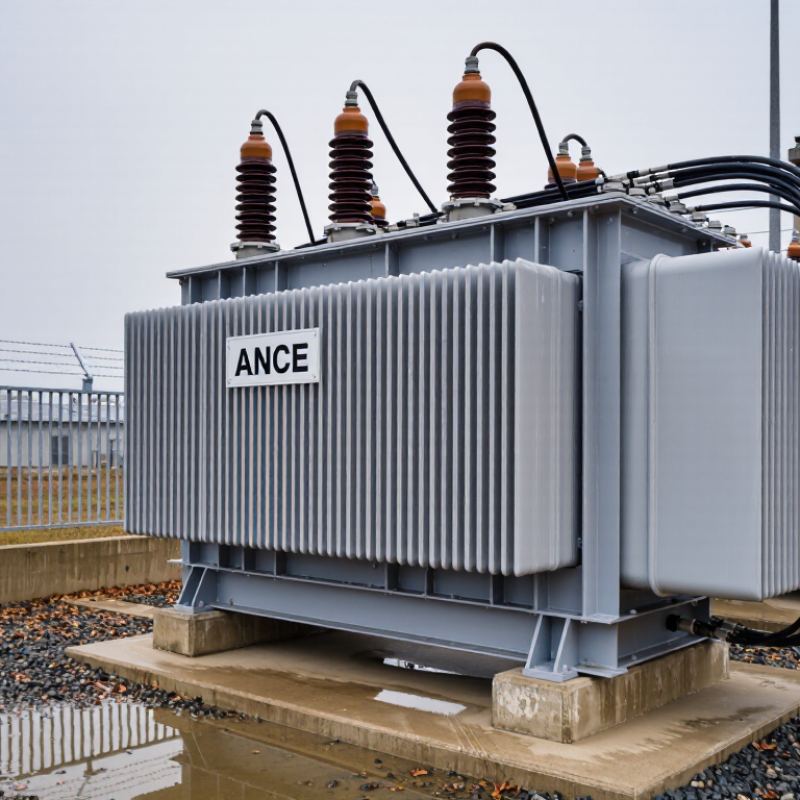
Its purpose is practical: deliver stable voltage while handling continuous electrical loads. A typical unit includes a steel tank, high- and low-voltage bushings, radiators, a tap changer, and a nameplate with key ratings. During field inspections, technicians may check oil temperature, leaks, bushing condition, grounding, and unusual humming. Small details matter. A loose connection can create heat long before a failure becomes visible.
“ANSI-rated” should not be treated as a universal quality label. The exact standard, test method, insulation level, efficiency requirement, and installation environment must be verified. Utility specifications and local electrical rules may add stricter conditions. In practice, selecting the transformer only by voltage and capacity is risky. Ambient temperature, altitude, fault duty, harmonics, and future load growth also influence the design. I have found that nameplate data can appear complete while leaving an important installation question unanswered. Look closer. The rating supports confidence, but careful engineering and maintenance make that confidence dependable.

Core Components and How the Transformer Operates
An ANSI-rated three-phase oil transformer is designed around recognized electrical and safety requirements. Its rating describes how the unit should perform under defined operating conditions. It is not simply a label for capacity or efficiency.
The core and windings form the transformer’s working center. Laminated steel core sections guide alternating magnetic flux while reducing energy loss. Three primary windings connect to the incoming supply. Three secondary windings deliver voltage to the load. Their phase angles are separated by 120 degrees, allowing balanced power transfer. Small details matter.
Mineral or approved insulating oil surrounds the active parts inside the steel tank. The oil separates energized conductors and carries heat toward cooling surfaces. Radiators release that heat into the surrounding air. Bushings provide insulated connections through the tank wall. A tap changer adjusts the turns ratio when system voltage changes, although it cannot correct every power-quality problem. Protective devices monitor pressure, temperature, and oil movement.
In operation, alternating current creates magnetic flux in the core. That flux induces voltage in the secondary windings without a direct electrical connection. The turns ratio determines whether voltage rises or falls. During field inspections, technicians check oil condition, connection tightness, grounding, leaks, and unusual sounds. Real installations are rarely perfect. Ambient heat, uneven loading, and aging insulation can reduce expected performance, so the nameplate should never replace measured operating data.
ANSI Ratings, Standards, and Performance Requirements
What Is an ANSI Rated Three Phase Oil Transformer?
ANSI Ratings, Standards, and Performance Requirements
An ANSI-rated three-phase oil transformer follows defined electrical and mechanical requirements. ANSI/IEEE C57.12.00 covers general transformer performance. IEEE C57.12.90 provides test methods. These standards address kVA capacity, voltage ratio, frequency, insulation level, temperature rise, dielectric strength, and short-circuit performance. The rating is not one simple number. It is a technical package. A nameplate may show 1,000 kVA, 13.8 kV primary voltage, 480 V secondary voltage, and a specified BIL. Oil also provides insulation and removes heat from windings. However, site temperature, loading patterns, and ventilation still affect actual performance.
Industry data shows why these details matter. The U.S. Department of Energy’s transformer analysis estimated that distribution transformer losses consume tens of billions of kilowatt-hours annually in the United States. Even small efficiency differences become significant across thousands of energized units. ANSI testing can verify no-load losses, load losses, applied voltage withstand, and temperature behavior. Field records remain essential. A compliant unit can still perform poorly if overloaded or poorly maintained. That is an uncomfortable but useful distinction.
Oil Insulation, Cooling Methods, and Safety Features
What Is an ANSI Rated Three Phase Oil Transformer?
An ANSI-rated three phase oil transformer is designed around recognized electrical and testing practices, often aligned with ANSI/IEEE C57 requirements. It serves industrial buildings, utility systems, and large commercial facilities. Three windings share one magnetic core arrangement, helping distribute balanced three-phase power. The nameplate should show voltage, kVA, frequency, impedance, temperature rise, and connection details. Those values guide safe installation and realistic load planning.
Oil provides insulation between energized windings and the grounded tank. It also carries heat away from the core and coils. In normal service, natural oil circulation moves warm fluid upward and cooler fluid downward. This method is called ONAN cooling. Larger units may use fans, known as ONAF cooling, when loads increase. Radiators, gauges, and conservator equipment make heat behavior easier to monitor. Small leaks still matter.
Safety features deserve careful attention. Pressure relief devices release dangerous internal pressure during a severe fault. Buchholz relays may detect gas or oil movement in conservator-type designs. Oil temperature indicators warn operators before insulation ages rapidly. A grounded tank, sealed bushings, and surge protection reduce electrical risk. Regular sampling can reveal moisture, dissolved gas, or insulation breakdown. I still treat the rating label as only a starting point. Field conditions can be less predictable. Poor ventilation, overloaded phases, or neglected oil testing may defeat an otherwise careful design.
What Is an ANSI Rated Three Phase Oil Transformer? - Oil Insulation, Cooling Methods, and Safety Features
| Data Dimension | Typical Information | Technical Description | Design or Safety Consideration |
|---|---|---|---|
| Transformer Type | Three-phase, liquid-immersed power or distribution transformer | Three primary windings and three secondary windings are magnetically coupled through a common three-phase core. | Three-phase construction normally provides a compact, efficient solution for industrial, utility, and commercial power systems. |
| ANSI/IEEE Rating Basis | Commonly specified using applicable ANSI/IEEE transformer requirements | Typical references include ANSI/IEEE C57.12.00 for general requirements, C57.12.90 for test procedures, and C57.91 for loading guidance. | The exact standard set depends on voltage class, transformer type, installation location, and the purchaser's specification. |
| Frequency | Typically 50 Hz or 60 Hz | The transformer is designed for a specified operating frequency, which affects core flux, losses, and heating. | Operating at a frequency different from the nameplate rating can increase excitation current or core saturation. |
| Common Voltage Range | Application-dependent; from low-voltage distribution systems to high-voltage utility networks | Primary and secondary voltages are selected according to the electrical system, insulation level, and required load service. | Actual ratings must be taken from the transformer nameplate and project specification rather than assumed from a general category. |
| Rated Capacity | Specified in kVA or MVA; distribution units are often rated in kVA | The rating represents the apparent power the transformer can deliver continuously under defined temperature and cooling conditions. | Continuous loading should consider ambient temperature, altitude, cooling mode, harmonics, and the applicable loading guide. |
| Insulating Liquid | Mineral insulating oil or an approved alternative liquid | The liquid provides electrical insulation between energized parts and transfers heat from the windings and core to the tank and radiators. | Liquid quality must be monitored for moisture, dielectric breakdown strength, acidity, oxidation, and dissolved gases. |
| Oil Insulation Function | Dielectric insulation and heat-transfer medium | Oil fills spaces around conductors and solid insulation, reducing the risk of internal electrical discharge while carrying heat away from active parts. | Water contamination and paper insulation aging can significantly reduce dielectric strength and service life. |
| Solid Insulation | Cellulosic paper, pressboard, or other approved insulating materials | Solid insulation separates windings and other energized components while providing mechanical support during short-circuit events. | Thermal aging of paper insulation is a major factor in transformer life expectancy. |
| Cooling Class: ONAN | Oil Natural, Air Natural | Internal oil circulation and external air circulation occur naturally through temperature-driven convection. | This is a simple and reliable cooling method, but its capacity is limited by radiator size and ambient conditions. |
| Cooling Class: ONAF | Oil Natural, Air Forced | Oil circulates naturally while fans force air across radiators or coolers to increase heat dissipation. | Fan controls, fan motors, alarms, and backup arrangements should be included in maintenance planning. |
| Cooling Class: OFAF | Oil Forced, Air Forced | Pumps circulate oil through heat exchangers while fans force air over the cooler surfaces. | This arrangement supports higher capacity but requires dependable pump, fan, control, and protection systems. |
| Temperature Rise | Common designs use approximately 55 °C or 65 °C winding temperature rise, subject to specification | Temperature rise is the increase above the specified reference ambient temperature when the transformer operates at rated conditions. | Lower temperature rise can reduce thermal stress, while the selected value affects size, cost, and capacity. |
| Tap Changer | De-energized tap changer or on-load tap changer | A tap changer adjusts the effective turns ratio to compensate for system voltage variation. | A de-energized tap changer requires the transformer to be disconnected before adjustment; an on-load type requires additional controls and maintenance. |
| Main Safety Protection | Pressure relief device, liquid-level indicator, temperature indicators, and protective relays | These devices detect abnormal pressure, low liquid level, excessive temperature, gas accumulation, or internal faults. | Alarm and trip settings must be coordinated with the protection system and validated during commissioning. |
| Pressure Relief Device | Spring-loaded or diaphragm-type pressure relief device | The device releases excessive internal tank pressure that may result from a severe internal fault or rapid gas generation. | It is not a substitute for electrical protection, correct grounding, or safe working procedures. |
| Conservator or Sealed Tank | Conservator-equipped or sealed-tank construction | A conservator allows liquid expansion into a separate vessel, while a sealed tank limits contact between the insulating liquid and atmospheric air. | A conservator may use a breather or bladder system; sealed designs require correct pressure and liquid-level monitoring. |
| Grounding | Grounded tank and defined winding neutral connection where applicable | The metallic tank is bonded to the facility grounding system, and the transformer winding connection is selected according to the system grounding design. | Grounding and bonding must comply with the applicable electrical code and site fault-current requirements. |
| Routine Condition Monitoring | Visual inspection, oil testing, temperature review, and electrical testing | Condition assessment may include dissolved gas analysis, moisture testing, dielectric breakdown testing, power factor testing, and winding resistance measurement. | Test intervals should be based on transformer importance, operating conditions, age, loading history, and observed trends. |
| Environmental and Fire Considerations | Oil containment, fire separation, ventilation, and spill-control provisions | Liquid-immersed transformers require installation measures that address leakage, combustible-liquid exposure, and access to energized equipment. | Site requirements should be reviewed against local electrical, fire, environmental, and occupational-safety regulations. |
| Typical Advantages | High efficiency, strong overload capability, and effective heat removal | Oil and solid insulation allow active parts to operate within controlled thermal and dielectric limits. | The transformer still requires correct installation, periodic inspection, protection coordination, and safe isolation before maintenance. |
Note: Values and features shown are typical industry practices. The transformer nameplate, approved drawings, purchase specification, and applicable standards govern the exact rating and configuration.
Applications, Selection Factors, and Maintenance Considerations
What Is an ANSI Rated Three Phase Oil Transformer?
An ANSI-rated three-phase oil transformer follows recognized electrical and mechanical requirements, including ANSI/IEEE C57.12.00. Its mineral or natural ester oil insulates windings and carries heat toward radiators. Typical applications include utility feeders, manufacturing plants, commercial buildings, and renewable-energy interconnections. The enclosure may sit outdoors, near a substation fence, or inside a controlled electrical room.
Selection should begin with the load profile, not only the nameplate kVA. Check primary and secondary voltages, frequency, impedance, tap range, ambient temperature, altitude, and expected motor starting current. Harmonic-producing equipment may require additional thermal review. The U.S. Department of Energy’s distribution-transformer analysis estimates annual U.S. transformer losses at roughly 60–80 billion kWh. Efficient sizing therefore matters, even when the transformer appears lightly loaded. Oversizing can reduce losses, but it may also increase purchase cost and reduce useful operating efficiency. That tradeoff deserves a real calculation.
Maintenance teams should inspect oil levels, leaks, bushings, grounding, radiator condition, and pressure-relief devices. Perform infrared surveys under load. Oil testing should include dielectric strength, moisture, acidity, and dissolved-gas analysis, following IEEE C57.106 and IEEE C57.104 guidance. A rising hydrogen or acetylene reading needs investigation, not an automatic replacement. Field records are often incomplete. That is a weakness. Reliable maintenance depends on trending test results, loading, ambient temperature, and previous repairs together.