2026 Best Industrial Network Switches for Your Business Needs?
In today's rapidly advancing industrial landscape, the role of an industrial network switch is critical. According to a recent market report, the global industrial Ethernet switch market is projected to reach $4.33 billion by 2027, with a compound annual growth rate (CAGR) of 7.2%. This growth highlights the increasing reliance on robust networking solutions in manufacturing and automation sectors.
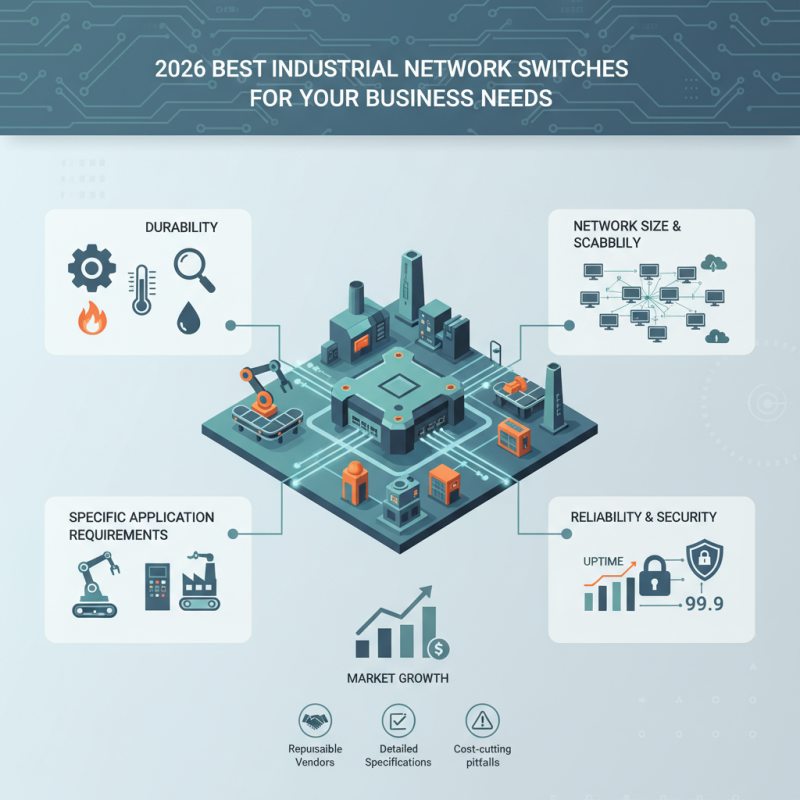
Selecting the right industrial network switch can be challenging. Industry experts suggest that businesses need to consider factors like durability, network size, and specific application requirements. For instance, ruggedness and temperature tolerance are paramount in harsh environments. Not all devices meet these criteria, which can lead to investment pitfalls. Additionally, as IoT integration becomes more common, the demand for switches supporting higher bandwidth and additional functionalities increases.
The choices are many, but not all switches deliver the expected performance. Engaging with reputable vendors and seeking detailed specifications is essential. Companies must remain aware that opting for cost-effective solutions without due diligence can lead to operational downtimes and security vulnerabilities. Therefore, thoughtful consideration is key in the selection process of an industrial network switch.
Overview of Industrial Network Switches and Their Importance
Industrial network switches are vital for modern businesses. They facilitate seamless communication between devices in demanding environments. In factories and warehouses, these switches ensure reliable connectivity for automation and data transfer. A robust switch minimizes downtime, which is crucial for productivity.
Choosing the right industrial switch is challenging. Many factors impact performance. Consider redundancy features to avoid single points of failure. It’s also important to assess temperature and humidity tolerances. Not every switch can handle extreme conditions. Some fail when conditions worsen and that can disrupt operations. Always evaluate your specific needs before making a decision.
Security is another concern. Industrial switches can be vulnerable to cyber threats. Many businesses overlook this aspect during selection. Regular updates and patches are essential, yet often neglected. Proper training for employees on network security can help mitigate risks. A proactive approach keeps operations running smoothly and securely.
Key Features to Consider When Choosing an Industrial Network Switch
When selecting an industrial network switch, several key features shape your decision. Understanding the operational environment is critical. Many industrial settings experience extreme temperatures and vibrations. Switches for these conditions must have rugged designs. Research shows that reliability can decrease by 30% if switches are not suited for harsh environments. Therefore, examining enclosure ratings is essential.
Power over Ethernet (PoE) capability is another important feature. This allows for powering devices like IP cameras and access points through the data cable. A report from a leading tech research firm indicated that nearly 50% of industrial installations now utilize PoE technology. It simplifies installations and cuts costs. However, managing power distribution is crucial, as unexpected power demands can lead to failures.
Additionally, consider the number of ports. It’s easy to underestimate the need for future scalability. Studies indicate that businesses often require 25% more ports than initially expected within two years of deployment. Oversized networks may contribute to management complexities and additional costs. Simplifying connections through appropriate port counts can mitigate these challenges, ensuring a smoother expansion path.
Top Brands in the Industrial Network Switch Market for 2026
When selecting industrial network switches for 2026, it's essential to focus on quality brands. These brands lead the market with reliable products. They provide robust devices designed to endure harsh environments. Durable and adaptable switches are crucial for business operations. Look for switches that offer high performance and flexibility.
Consider maximizing your investment. Quality features may come at a higher initial cost. However, they often reduce failures and downtime. This can save money in the long run. Look for options with built-in redundancy and advanced security features. This ensures your network remains secure and operational.
Tips for selection: Evaluate the specific needs of your business. Size, speed, and scalability matter. Some devices may not offer the required support. It’s important to read reviews and seek feedback from other users. This often reveals insights not found in product descriptions. Don't ignore warranty and customer support. Good after-sales service can be invaluable.
2026 Best Industrial Network Switches for Your Business Needs
| Model | Ports | Speed (Gbps) | Form Factor | Temperature Range (°C) | Power Supply | Price (USD) |
| Model A | 8 | 1 | Rack-mounted | -40 to 75 | Redundant | $399 |
| Model B | 16 | 10 | Tabletop | -20 to 60 | Single | $599 |
| Model C | 24 | 1 | Rack-mounted | -40 to 70 | Dual | $849 |
| Model D | 12 | 2.5 | Compact | -10 to 50 | Single | $299 |
| Model E | 48 | 1 | Rack-mounted | -40 to 85 | Redundant | $1200 |
Comparative Analysis of 2026's Best Industrial Network Switches
In 2026, the industrial network switches market is projected to grow significantly. A recent industry report indicates a market size increase of approximately 10% annually. This growth is driven by the rise of IoT and automation in various sectors. Industrial switches play a pivotal role in enhancing connectivity, enabling real-time data transfer.
While analyzing the options available, one finds a variety of features. Some switches support up to 10 Gbps speeds, while others focus on ruggedness for harsh environments. However, performance often comes with a steep learning curve. Businesses may overlook critical aspects like firmware compatibility and redundancy features. This oversight can lead to network outages and lost productivity, which is alarming.
Energy efficiency remains another concern. Reports show that up to 15% of operational costs can come from energy usage of network equipment. Selecting the right industrial switch can lead to lower energy expenses. Still, choices must be made carefully to balance cost and efficiency. Overall, the landscape is complex. As organizations navigate their specific needs, careful evaluation is critical.
Future Trends and Innovations in Industrial Network Switching Technology
The future of industrial network switching technology is evolving rapidly. In 2026, businesses will likely demand faster, more reliable network switches. Data from recent industry reports indicate that the market for industrial switches is projected to grow at a compound annual growth rate (CAGR) of 10.5% from 2023 to 2028. This growth highlights the increasing importance of robust network infrastructure in industrial applications.
One critical trend is the integration of AI and machine learning in network management. These technologies can enhance performance and reduce downtime. For instance, switches equipped with AI can predict network traffic and adjust bandwidth accordingly. This innovation not only increases efficiency but also allows for smarter decision-making. However, companies must be cautious. Relying too heavily on automation can lead to vulnerabilities if systems fail to adapt properly.
Tips: Regularly evaluate your network's performance. Check for bottlenecks. Also, stay informed about software updates for your switches. Another consideration is cybersecurity. As networks become more complex, they can be prone to attacks. Investing in advanced security features can help mitigate these risks. Balancing innovation with practical limitations is essential for ongoing success in industrial networking.