China Best Safety Lockout Box Manufacturer Supplier?
Choosing a China best Safety Lockout Box manufacturer or supplier requires more than comparing prices. It requires evidence, practical testing, and a clear understanding of workplace risks. A dependable supplier should provide durable boxes, visible labels, secure latches, and enough space for multiple personal locks. Materials matter too. Powder-coated steel resists harsh workshops, while reinforced polymer can reduce weight and corrosion concerns. Small details often decide whether equipment works during a stressful shutdown.
James Reason, a respected human-factors and safety expert, wrote, “We cannot change the human condition, but we can change the conditions under which humans work.” This principle applies directly to Safety Lockout Box selection. A well-designed box makes lockout procedures easier to see, follow, and verify. It can hold group lockout devices, tags, hasps, and written instructions in one controlled location. However, no box can correct poor training or unclear responsibility. That limitation deserves honest attention.
This guide examines how Chinese manufacturers demonstrate experience, engineering ability, quality control, and dependable service. It considers material thickness, hinge strength, lock capacity, customization, inspection records, and export support. Product photos are useful, but they are not enough. Ask for samples. Test the lid, handle, mounting points, and label readability. Check whether the supplier explains production tolerances and replacement support clearly. A lower quotation may hide thinner materials or inconsistent finishing. The best supplier is not always the cheapest one. It is the partner whose Safety Lockout Box performs reliably when maintenance teams need control, visibility, and confidence.
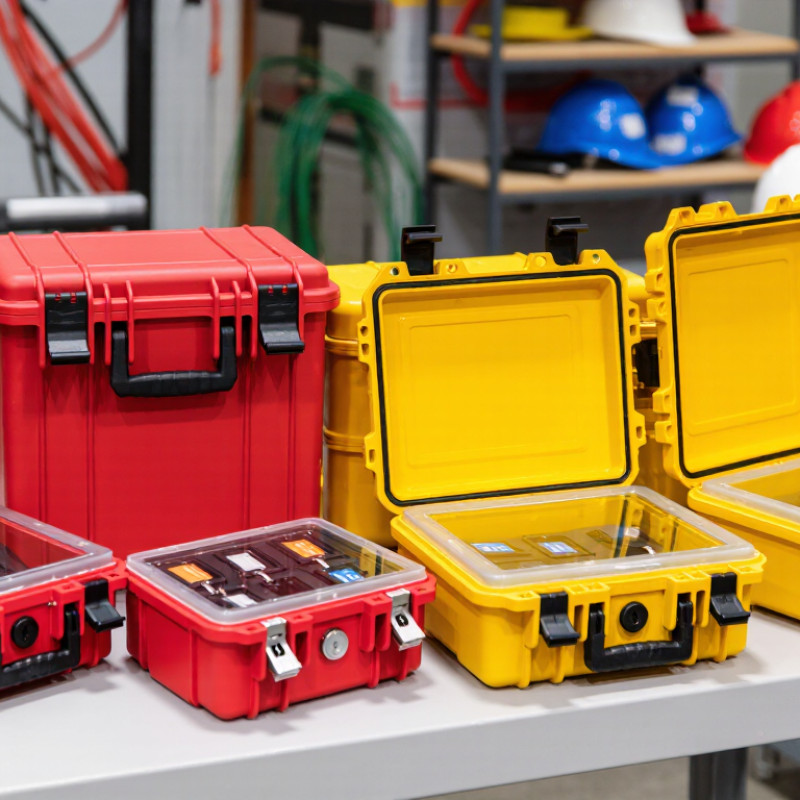
What Is a Safety Lockout Box?
A safety lockout box is a secured container for controlling hazardous energy during maintenance. It holds keys, locks, tags, hasps, and isolation records. After an energy source is isolated, its key goes inside the box. Each authorized worker then applies a personal lock. The equipment cannot restart until every worker removes their lock.
This system supports group lockout/tagout procedures. It is useful for electrical panels, valves, hydraulic lines, and pneumatic systems. A practical box should resist impact, remain visible, and provide enough space for several locks. Clear labels matter. Missing information can create dangerous assumptions.
OSHA states that effective hazardous-energy control could prevent about 120 workplace fatalities and 50,000 injuries each year in the United States, according to its Lockout/Tagout Fact Sheet and standard 29 CFR 1910.147.
Tips: Check the box before every job. Confirm isolation points against the machine procedure. Count all personal locks before re-energizing equipment. Keep the key inventory current. A common weakness is treating the box as storage instead of a control point. It should be inspected after dusty, wet, or high-temperature work. Supervisors should also verify worker training and document unusual shutdowns. Small gaps remain possible, especially during shift changes. That deserves honest review.

Key Features of a Reliable Lockout Box Manufacturer
A reliable lockout box manufacturer should understand real workplace demands, not only product drawings. Experienced manufacturers test boxes in dusty workshops, humid storage rooms, and busy maintenance areas. Durable ABS or polycarbonate construction helps resist impact and daily handling. Clear labels should remain readable after repeated cleaning. A strong box also needs secure hinges, smooth edges, and enough space for several personal locks. Custom colors, compartments, and mounting holes can improve team control. Small details matter.
Tips: Ask for material specifications, sample photos, and test records before ordering. Check whether the manufacturer can provide stable dimensions across repeated production batches. Request a sample box and inspect its latch, wall mount, label surface, and internal capacity. Do not rely only on attractive catalog images.
Reliable suppliers use documented quality checks from raw materials to final packing. They should explain inspection methods clearly and provide traceable production information. Practical support matters too. A knowledgeable team can recommend box size, lock capacity, and label placement for different work areas. Factory communication should be direct and consistent. Delayed replies may become costly during installation.
No supplier is perfect. Even experienced teams can overlook a small fitting issue. That is why sample approval and feedback records remain valuable. A dependable manufacturer listens, corrects problems, and improves later batches. This behavior often reveals more than a low quotation.
How Safety Lockout Boxes Support Workplace Lockout Procedures
A safety lockout box gives authorized workers one controlled place for keys, locks, tags, and isolation records. During equipment shutdown, each worker applies a personal lock to the box. The key for the energy-isolating device stays inside. No one should remove it while a personal lock remains attached. This arrangement supports group lockout procedures around conveyors, presses, pumps, and electrical panels. It also reduces scattered hardware on a busy maintenance floor. Good organization matters.
An effective procedure starts with an energy assessment, not the box itself. Workers identify electrical, hydraulic, pneumatic, thermal, and stored mechanical energy. They stop the machine, isolate each source, and verify zero energy with suitable testing equipment. The box then holds the isolation keys under a documented control process. A supervisor or authorized coordinator checks names, permits, and shift changes. Every person receives instruction before joining the task. Experience shows that unclear ownership causes delays and unsafe assumptions.
The box is not a substitute for training or verification. A damaged latch, missing label, or outdated procedure can weaken the whole system. I have seen teams focus on neat hardware while overlooking residual pressure in a line. That mistake deserves attention. Periodic inspections should examine locks, tags, records, and worker understanding. Procedures also need review after equipment changes, near misses, or repeated confusion. Sometimes a short briefing reveals more than a formal checklist.
How Safety Lockout Boxes Support Workplace Lockout Procedures
A safety lockout box supports group lockout/tagout by keeping the keys to energy-isolating devices secured while each authorized worker applies a personal lock. The chart follows the core sequence described in OSHA 29 CFR 1910.147: prepare, shut down, isolate, lock out, release stored energy, verify isolation, perform the work, and restore service.
How to Evaluate a Lockout Box Supplier
China Best Safety Lockout Box Manufacturer Supplier?
How to Evaluate a Lockout Box Supplier
A reliable lockout box supplier should prove safety claims with documents, not attractive photographs. OSHA estimates that effective lockout/tagout practices prevent about 120 workplace deaths and 50,000 injuries each year. Therefore, ask for material certificates, inspection records, and test methods before discussing price.
Check whether the box uses impact-resistant materials, clear labels, secure hinges, and corrosion-resistant hardware. The design should fit actual locks, tags, and hasps used by your maintenance team. Ask for dimensional drawings and sample units. Small details matter. A crowded box slows emergency isolation.
Supplier evaluation should also include production control and traceability. Request batch numbers, quality inspection plans, and corrective-action records. Independent testing can strengthen confidence, especially for electrical, chemical, or outdoor environments. ISO 45001 guidance emphasizes controlled hazard-management processes, but certification alone is not proof of product quality.
Review delivery history and communication during technical changes. A capable supplier should explain tolerances, packaging, spare parts, and replacement procedures clearly. Factory audits can reveal inconsistent labeling or weak final inspections. These problems are easy to miss online. A lower quotation may hide thinner walls, unstable supply, or incomplete documentation. I would not ignore that risk. Yet supplier audits are imperfect too; one visit cannot represent every production batch. Recheck samples periodically and record field feedback before approving long-term orders.
China Best Safety Lockout Box Manufacturer Supplier? - How to Evaluate a Lockout Box Supplier
| Evaluation Dimension | Recommended Benchmark | Evidence to Request | Suggested Weight | Why It Matters |
|---|---|---|---|---|
| Regulatory and Safety Compliance | Products should support an employer’s lockout/tagout program and be suitable for hazardous-energy control procedures. | Product specifications, application instructions, risk assessment, and compliance statement referencing applicable local requirements. | 15% | A lockout box is part of a safety system; suitability depends on the workplace procedure, not appearance alone. |
| Quality Management System | A documented quality system with controlled production, inspection, corrective action, and traceability processes. | Valid third-party quality-management certificate, audit scope, certificate number, issuing body, and expiration date. | 10% | Consistent processes reduce variation between production batches. |
| Material Selection | Material should match the environment; common options include impact-resistant polycarbonate, ABS, powder-coated steel, or stainless steel. | Material grade, thickness, safety data where applicable, color stability information, and sample inspection. | 10% | Material affects impact resistance, corrosion resistance, weight, visibility, and service life. |
| Mechanical Durability | The enclosure, hinges, latch, wall mount, and padlock holes should withstand routine industrial handling without sharp edges or functional failure. | Defined inspection criteria, load or impact test records, dimensional drawings, and pre-shipment inspection reports. | 10% | A damaged enclosure or latch can prevent authorized users from applying or removing locks correctly. |
| Environmental Protection | For outdoor, dusty, or wet locations, request an enclosure tested to an appropriate ingress-protection level under IEC 60529. | Ingress-protection test report, test conditions, enclosure configuration, gasket details, and installation limitations. | 8% | Dust and water can affect locks, labels, hinges, and the long-term usability of the box. |
| Capacity and Layout | Capacity should accommodate the required number of personal locks, tags, keys, and group-lockout accessories with clear identification. | Internal dimensions, number and diameter of lock holes, accessory layout, mounting dimensions, and product drawings. | 8% | Insufficient capacity can force unsafe workarounds during group lockout operations. |
| Customization Capability | The supplier should support practical customization such as dimensions, mounting options, labels, colors, and language requirements. | Approved drawings, artwork procedures, prototype samples, tooling ownership terms, and change-control records. | 7% | Customized identification can improve recognition and integration with site procedures. |
| Testing and Inspection | Critical dimensions, materials, appearance, function, and packaging should be checked using documented acceptance criteria. | Incoming, in-process, and final inspection plans; sampling standard; calibration records; and corrective-action reports. | 10% | Documented inspection is more reliable than a visual review of one sample. |
| Sample Approval Process | The supplier should provide representative samples before mass production and record approved specifications. | Sample approval form, signed drawings, test results, deviation list, and production-to-sample comparison procedure. | 6% | Approval controls reduce the risk of receiving products that differ from the quotation sample. |
| Production Capacity and Lead Time | Lead times should be quoted separately for samples, standard orders, customized orders, and replenishment orders. | Capacity statement, production schedule, material availability, order milestones, and historical on-time delivery data. | 6% | Reliable delivery supports maintenance planning and prevents shortages of safety equipment. |
| Packaging and Export Documentation | Packaging should protect the box from abrasion, deformation, moisture, and contamination during transport. | Packing specification, carton dimensions, product labels, commercial invoice, packing list, and agreed shipping terms. | 4% | Correct packaging and documents reduce transit damage and customs delays. |
| Warranty and After-Sales Support | Warranty terms should define coverage, exclusions, claim evidence, response time, replacement policy, and spare-part availability. | Written warranty, complaint-handling process, service contact, replacement procedure, and technical documentation. | 6% | Clear support arrangements reduce downtime when defects or installation questions occur. |
| Total Suggested Evaluation Weight | 100% | Use the weights as a starting point and adjust them to match the application risk and purchasing requirements. | ||
Factors for Choosing the Best Safety Lockout Box Supplier
Choosing the Best Safety Lockout Box Supplier
A safety lockout box supports controlled energy isolation during equipment maintenance. From workplace inspections, I look for strong construction and simple operation. The box should resist impact, moisture, dust, and frequent handling. Clear labeling matters. Workers must identify stored keys quickly, even in poor lighting.
Material quality is an important supplier factor. Powder-coated steel offers durability, while reinforced transparent panels improve visibility. Check the hinge, latch, wall-mount points, and lock openings before ordering. The internal space should fit group lockout devices without forcing them into place. Ask for product drawings, material details, inspection records, and batch traceability. A reliable supplier should explain testing methods clearly, not hide behind general claims.
Capacity also deserves careful attention. A small box may suit one machine, but complex maintenance teams need more lock positions. Confirm whether replacement parts remain available. Request a sample when possible. I once saw a well-finished box with a weak latch; appearance had created false confidence. That was a useful reminder. Supplier evaluation should include factory audits, response speed, delivery consistency, and technical support. Relevant occupational safety requirements should be considered for the operating region. Still, paperwork cannot replace practical testing. Place the box near the isolation point, open it with gloves, and check whether every action feels obvious.