How to Choose the Best Rubber Air Hose for Your Needs?
Choosing the right rubber air hose is essential for any project. John Smith, a seasoned expert in pneumatic tools, once said, "The quality of your hose can make or break your work efficiency." This insight emphasizes the importance of selecting a suitable rubber air hose.
When it comes to rubber air hoses, various factors come into play. Users must consider the hose length, diameter, and flexibility. The right choice affects performance and durability. For instance, a short, rigid hose may limit your movement, causing frustration and reduced productivity.
Moreover, different applications require different specifications. A heavy-duty rubber air hose is better for industrial tasks, while a lighter option may suffice for DIY projects. Reflecting on your specific needs can guide you in making a more informed decision. Understanding these details is vital for a successful purchase. A poorly chosen hose can lead to inefficiency and increased costs.
Understanding the Different Types of Rubber Air Hoses Available
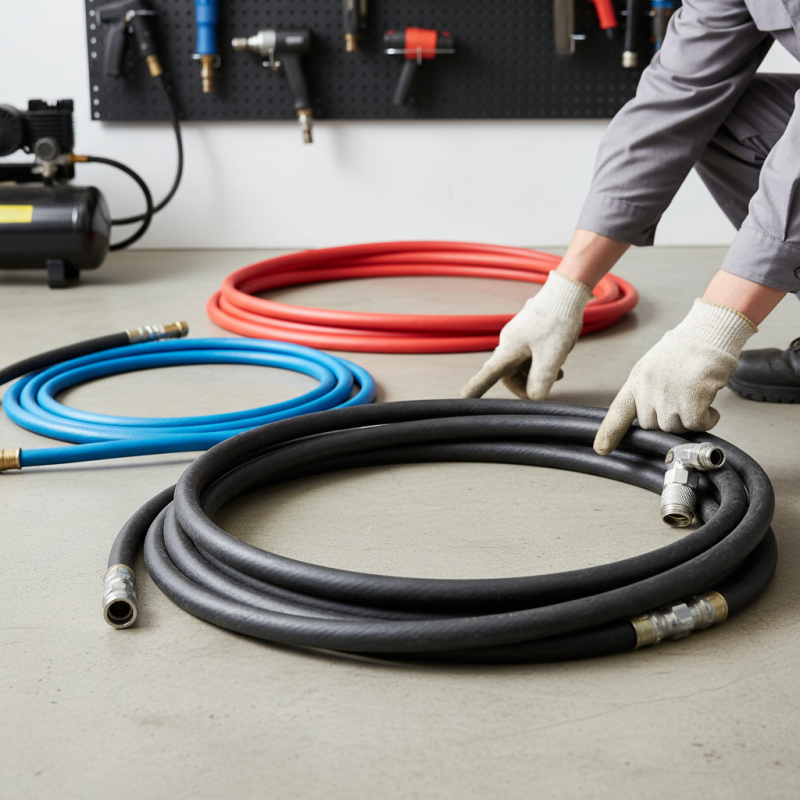
Choosing the right rubber air hose can greatly enhance your work efficiency. Various types of rubber air hoses are available. Each type has distinct features suited for different applications. Understanding these features helps in making an informed choice.
One common type is the standard rubber air hose. It is durable and resistant to abrasion. These hoses are typically used for general purposes. However, they might not withstand extreme temperatures well. You might need specialized hoses for such conditions.
Another type is the reinforced rubber air hose. This version has mesh or spiral reinforcements. It offers higher pressure ratings and flexibility. It works well for heavy-duty requirements. But, this added strength can make it heavier and less maneuverable.
Tips: When choosing a hose, consider its length and diameter. A thicker hose can deliver more air. However, it will be bulkier. Balance your need for airflow with ease of transport. Test different hoses if you can. Personal experience provides valuable insights.
Key Factors to Consider When Choosing an Air Hose
Choosing the right rubber air hose is crucial for effective performance. Consider the diameter. A larger diameter allows for more airflow, making it suitable for heavy-duty tasks. However, it can be bulkier. A smaller diameter is easier to handle but may restrict airflow. Balance is key.
Next, assess the length you need. Longer hoses give you more reach. But they can become tangled and reduce airflow. If you work in tight spaces, a shorter hose might be better. Additionally, consider the pressure rating. Ensure the hose can handle the pressure of your air compressor. Underestimating this could lead to failures.
Flexibility is also important. A stiff hose can be hard to maneuver. Look for hoses that remain flexible even in cold conditions. This flexibility helps during winter months. It's often overlooked, but hose fittings are vital too. Make sure they are compatible with your tools to avoid leaks. Reflect on these factors to make an informed choice.
Evaluating Durability and Flexibility of Rubber Air Hoses
When selecting a rubber air hose, durability and flexibility are crucial factors. Research indicates that rubber hoses typically last between 5 to 10 years. However, environmental factors can significantly impact their lifespan. A hose exposed to extreme temperatures or harsh chemicals may degrade faster. It's essential to consider the specific conditions where the hose will be used.
Flexibility is another key aspect. A flexible hose allows for easier handling and maneuverability. According to industry reports, hoses with a smaller diameter tend to be more flexible. But, they may sacrifice air flow. Balancing diameter and flexibility is a challenge many face. You want a hose that can bend without kinking. Kinks can lead to pressure loss and reduced efficiency.
Even with the best options available, users must evaluate their needs critically. Some might prefer a heavier hose for added durability, while others might prioritize lighter, easier-to-handle models. Reflecting on how often and under what conditions the hose will be used can help in making an informed decision. Every choice comes with trade-offs, and understanding these can lead to a better purchase.
Understanding Hose Size and Length for Your Application
Choosing the right air hose means understanding size and length. The diameter affects air flow. A larger diameter allows more air. But it can be bulkier and harder to handle. Think about your workspace.
The length of the hose matters too. Shorter hoses minimize pressure loss but limit your reach. Longer hoses offer flexibility but can reduce power. Sometimes, longer hoses are heavier and harder to manage.
Tips: Consider your typical working distance. Think about where you will use the hose most often. Avoid going too long if it's unnecessary. Keep the hose neatly coiled when not in use. A tangled hose can become a nuisance. Select the size and length based on your specific tasks. Reflect on your needs before making a choice.
Analyzing Compatibility with Air Tools and Equipment
When selecting a rubber air hose, compatibility with your air tools is crucial. Different tools require specific pressure levels and diameter sizes. For instance, a smaller air tool might work well with a 1/4-inch hose, while larger equipment often requires a 3/8-inch or even a 1/2-inch hose. It’s essential to match these specifications for optimal performance.
Consider the working environment too. If you're operating in a tight space, a more flexible hose may be necessary. However, flexibility can sometimes decrease durability. Choosing a balance is key. Also, double-check your tools' air consumption rate. A mismatch can lead to inefficiency or insufficient power for your tasks, which can be frustrating.
Inspecting the fittings is another detail to keep in mind. Ensure that the fittings on the hose match your tools to avoid leaks and ensure safety. Sometimes the perfect hose might not fit a specific tool perfectly, requiring an adapter. This can be an additional expense or make setup more complicated. Taking the time to analyze these aspects can save time and enhance your project's outcome.
How to Choose the Best Rubber Air Hose for Your Needs? - Analyzing Compatibility with Air Tools and Equipment
| Hose Diameter | Working Pressure (psi) | Length (ft) | Temperature Range (°F) | Recommended Use | Compatibility |
| 1/4" | 300 | 50 | -20 to 150 | Light-duty air tools | Nailers, Staplers |
| 3/8" | 250 | 100 | -10 to 180 | Medium-duty air tools | Impact Wrenches, Ratchets |
| 1/2" | 200 | 150 | 0 to 190 | Heavy-duty air tools | Air Compressors, Sprayers |
| 5/8" | 150 | 200 | -20 to 190 | Industrial applications | Multiple tools |