7 Tips for Choosing the Right Railway Wagon Axle
Selecting the right Railway Wagon Axle is a practical engineering decision, not a simple purchasing task. The axle supports heavy loads, transfers braking forces, and faces repeated impacts on uneven track. A small specification error can create noise, uneven wheel wear, or costly service interruptions.
Experienced maintenance teams usually begin with the wagon’s operating profile. They examine axle load, running speed, curve frequency, climate, braking method, and expected service life. Material grade matters, but so do heat treatment, machining accuracy, surface finish, and inspection records. A reliable supplier should provide traceable test data, dimensional reports, and clear quality-control procedures. Ask difficult questions.
The seven tips in this guide focus on the details that are often missed during rushed procurement. They cover load compatibility, axle dimensions, steel quality, manufacturing standards, fatigue resistance, inspection methods, and supplier support. Each point connects technical evidence with real workshop concerns, such as fitting clearances, wheel-seat condition, and corrosion around exposed surfaces. A strong choice is measurable and documented. It should also match the actual railway environment, rather than an ideal specification copied from another project.
No axle selection process is perfect. Field conditions can change, and even a well-designed component may require closer monitoring than expected. Engineers should review operating feedback, maintenance findings, and inspection results over time. Careful records reveal patterns that drawings cannot. With disciplined evaluation, the right Railway Wagon Axle can improve safety, stability, maintenance planning, and long-term operating confidence.、】【
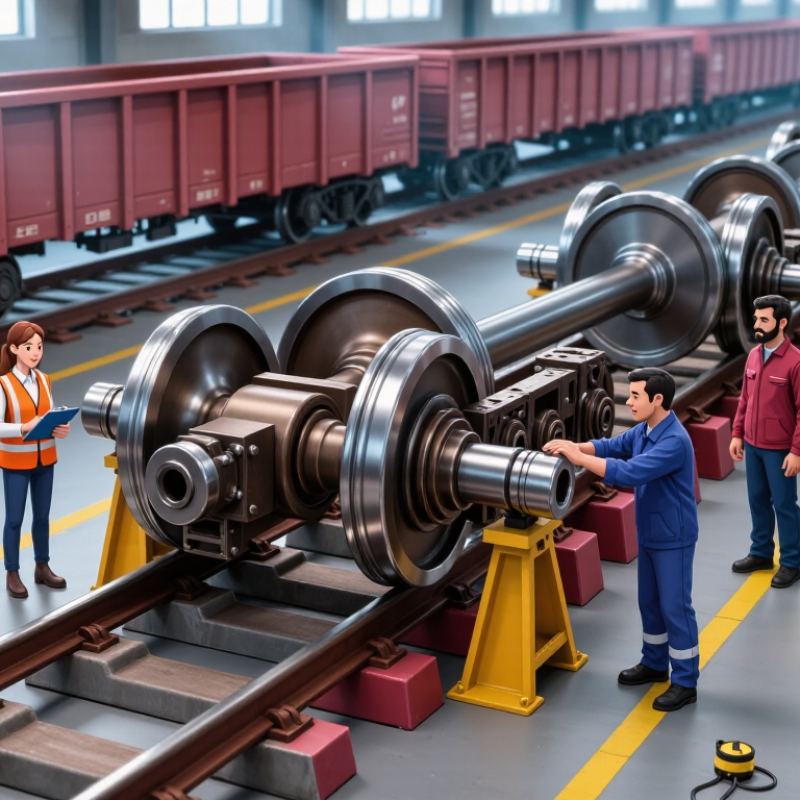
Define the Axle’s Role in Railway Wagon Performance
7 Tips for Choosing the Right Railway Wagon Axle
Define the Axle’s Role in Railway Wagon Performance
An axle is not merely a steel connector between two wheels. It transfers cargo, braking, and lateral forces through the wagon. In 2023, EU rail freight reached approximately 375 billion tonne-kilometres, according to Eurostat. That workload makes axle fatigue resistance a practical performance issue. A loaded wagon may carry 22.5 tonnes per axle on standard heavy-freight routes. Some corridors permit higher loads. Therefore, define the wagon’s payload, speed, curve radius, and route classification before selecting an axle.
The axle must match the wheelset, bearings, suspension, and braking system. A small mismatch can increase heat, vibration, or wheel flange wear. The European Commission’s 2024 Rail Market Monitoring Report tracks freight efficiency through tonne-kilometres and wagon utilisation. These indicators reveal why durability alone is not enough. An axle that survives laboratory loading may still perform poorly under repeated curves, uneven track, or severe temperature changes. Design review should include ultrasonic inspection access, corrosion protection, and documented material traceability.
Keep the calculation honest.
Field experience often exposes assumptions that drawings hide. I have seen maintenance teams focus on axle diameter while overlooking bearing seating and brake-induced heat. That is an imperfect approach. Choose a verified steel grade, then confirm impact toughness, fatigue life, and dimensional tolerances against applicable railway standards. Record actual loads and inspection findings after service. A spreadsheet may predict twenty years, but real routes can disagree. Periodic non-destructive testing remains essential, especially where freight cycles are frequent or track conditions are inconsistent.
Match Axle Design to Wagon Load and Operating Conditions
7 Tips for Choosing the Right Railway Wagon Axle
Match the axle to the wagon’s gross load, not its empty weight. Check payload, tare weight, and uneven loading. Tip one: calculate the highest wheel load. Tip two: include braking and shunting forces. Tip three: allow for impact loads on poor track. A higher axle load is not automatically safer. It can increase wheel, bearing, and track damage. Select the axle material and diameter through verified stress calculations. Review bending, torsion, fatigue, and fracture resistance.
Operating conditions matter just as much. Tip four: assess speed, curve radius, gradients, and braking frequency. Tip five: specify protection for water, dust, salt, and temperature changes. Tip six: confirm bearing seats and wheel fits against approved tolerances. Small surface defects can grow under repeated cycles. Field inspections should record cracks, overheating marks, wheel-seat movement, and unusual wear. Keep measurable records.
Tip seven: match the design to the maintenance system. An axle requiring specialist inspection may not suit a remote depot. Use documented manufacturing controls, traceability, non-destructive testing, and independent certification. Check the applicable railway standards before approval. Do not rely on a catalogue value alone. A spreadsheet may look precise but still miss uneven cargo or rough track. That weakness deserves review. Ask an experienced rail engineer to challenge the assumptions, especially when service conditions change.
Evaluate Compatibility with Wheels, Bearings, and Suspension Systems
7 Tips for Choosing the Right Railway Wagon Axle
Evaluate Compatibility with Wheels, Bearings, and Suspension Systems
An axle is not a standalone component. Its wheel seats, bearing journals, and suspension interfaces must match the wagon design. Check wheel-seat diameter, shoulder geometry, and gauge before reviewing supplier drawings. EN 13260 specifies essential wheelset dimensions and quality requirements. Measure twice. A small mismatch can create uneven wheel loading, vibration, or premature bearing damage.
Bearing compatibility requires more than matching the journal diameter. Confirm fits, axial location, sealing arrangement, lubrication method, and calculated load capacity. ISO 15243 failure classifications help engineers distinguish fatigue, contamination, and mounting damage. The International Union of Railways reports that freight axle loads and operating speeds vary widely across networks. Therefore, a proven axle design may still perform poorly under different duty cycles. I have seen calculations look complete while suspension travel was overlooked.
Inspect the suspension interface in real operating positions. Check lateral displacement, vertical load transfer, brake clearance, and spring-seat alignment. Wheel unloading during curves can increase derailment risk. The European Union Agency for Railways recorded 1,567 significant railway accidents in 2022, according to its 2024 safety overview. This figure does not prove axle failure, but it reinforces disciplined interface checks. Consider fatigue testing under combined bending and torsion, not only static strength. Field inspection records should feed back into the axle specification. Sometimes, the original design assumption is simply wrong.
Compare Safety Certification, Maintenance Needs, and Total Cost
Tip 1: Verify safety certification before comparing prices. A railway wagon axle should have traceable material certificates, fatigue-test results, and dimensional inspection records. Check whether the documentation matches your operating region and wagon design. Independent verification is valuable when paperwork looks unusually general. I once treated a low purchase price as a saving. That judgment was wrong.
Tip 2: Examine maintenance needs in practical detail. Ask about ultrasonic inspection intervals, bearing-seat tolerances, corrosion protection, and wheelset removal procedures. An axle requiring frequent measurements may increase depot labor and service delays. Request clear maintenance instructions, not just a durability claim. Keep sample inspection records from similar wagons. They reveal problems that brochures often hide.
Tip 3: Calculate total cost across the axle’s working life. Include purchase price, freight, installation, inspections, wheel replacement, downtime, and disposal. A cheaper axle may need more frequent reconditioning. A premium option may still be unsuitable if spare parts are difficult to obtain. Use realistic mileage and load data from your fleet. Estimates can be imperfect, but vague estimates are worse. Ask an independent rail engineer to challenge your assumptions before approval.
7 Tips for Choosing the Right Railway Wagon Axle
An evidence-based procurement framework comparing safety certification, engineering quality, maintenance needs, and total lifecycle cost.
The percentages represent a transparent example of procurement decision weights totaling 100%. Certification and load suitability should be verified against the applicable railway rules, such as EN 13261, AAR M-101, or national requirements. Maintenance planning should include inspection access, non-destructive testing, wheelset compatibility, spare-part availability, and expected service life.