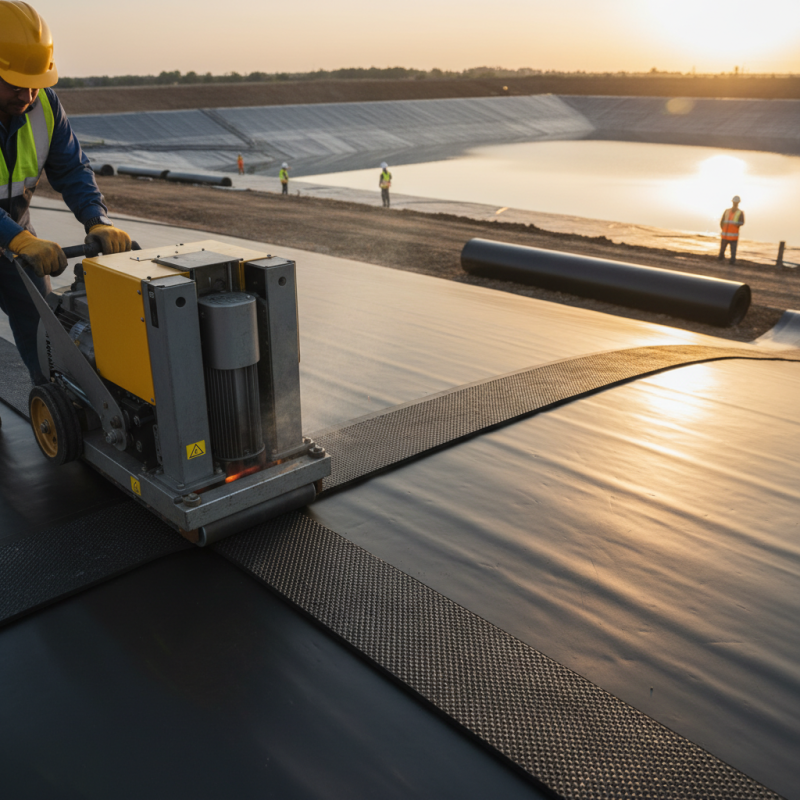
What is a geomembrane welding machine and how does it work?
A geomembrane welding machine is an essential tool in the construction and environmental industries. It is designed to join geomembranes effectively, ensuring durability and reliability. These machines use heat, pressure, or solvents to create strong seams.
The working principle involves heating the edges of geomembranes, which then fuse together. Operators must be skilled to manage the machine effectively. Poor technique can lead to weak seams, compromising integrity. This highlights the need for a trained workforce.
Though powerful, the geomembrane welding machine has limitations. It requires precise temperature control and technique. Inadequate awareness or training can result in errors. Therefore, ongoing training and experience are critical. Investing in the right tools and knowledge is key to success in projects involving geomembrane welding.
What is a Geomembrane Welding Machine?
A geomembrane welding machine is essential in various industries, particularly in environmental and civil engineering. These machines are designed for fusing geomembrane materials, often used in containment applications such as landfills and water reservoirs. According to a report from MarketsandMarkets, the geomembrane market is projected to reach $3.5 billion by 2026, underscoring the growing demand for effective welding technologies.
The welding process involves heat and pressure. The machine heats the overlapping edges of geomembranes, which are typically made from polyethylene or polyvinyl chloride. As the edges reach a molten state, they are pressed together, forming a strong seam. This method ensures durability and resistance to environmental factors, which can be crucial in applications where leaks are unacceptable. However, improper settings can lead to weak joints, which require future repairs.
While many machines offer advanced features, operational inconsistencies remain a concern. User proficiency plays a significant role in the quality of the weld. A report from the Geosynthetics Institute indicates that improper welding can lead to costly failures. Regular training and quality assurance measures are needed for effective use. Focusing on these aspects can help achieve better results and mitigate long-term risks.
Key Components of Geomembrane Welding Machines
Geomembrane welding machines are crucial in various industries. Their main role is to create reliable seams in geomembranes used for containment applications. Understanding the key components of these machines can enhance their effectiveness and longevity.
The heat source is the core of a welding machine. It provides the necessary temperature to join geomembrane sheets. Proper heating ensures strong bonds. In fact, a report from the Geosynthetic Research Institute highlighted that improper heating can reduce seam strength by up to 40%. Additionally, the pressure control system plays a significant role. It regulates the force applied during welding. If the pressure is too low, leaks occur. Too high, and the geomembrane can deform, leading to weak seams.
Another essential component is the roller for embedding the seams. This roller ensures uniform pressure across the weld. A consistent seam width is crucial for structural integrity. The machine's control panel also deserves attention. It allows operators to monitor temperature and pressure in real-time. However, operator errors in this area can lead to defects. Training is vital to minimize mistakes. Investing in high-quality components can significantly reduce long-term costs. Regular maintenance checks are also necessary to avoid unexpected failures.
Types of Welding Methods and Their Applications
Geomembrane welding machines are crucial in constructing barriers for landfills, ponds, and reservoirs. Understanding the types of welding methods helps in selecting the right technique based on project needs. This choice influences durability, cost, and environmental safety.
One common welding method is hot wedge welding. In this method, a heated wedge melts the geomembrane edges together. It offers excellent seam integrity, with reported tensile strengths up to 30% higher than other methods. Another popular choice is extrusion welding. This technique uses a welding rod that melts and fills the seam. Reports suggest that it can be applied in various temperatures and conditions, making it versatile, yet it might need more practice for quality results.
**Tips:** Always check material compatibility before welding. Improper selection can lead to failures. Additionally, conduct regular training for operators. Even experienced personnel can benefit from updates on technology. Routine inspection of the weld area ensures that potential weaknesses are addressed promptly. Remember, quality control is not just a step; it’s an ongoing process.
Performance Standards and Quality Control in Geomembrane Welding
Geomembrane welding is crucial in various industries. It ensures the integrity of liners for landfills, reservoirs, and other containment areas. To achieve optimal performance, adherence to specific standards is vital. Quality control in geomembrane welding relies on thorough inspections and testing. Visual checks should be routine. Regular equipment maintenance is essential for consistent results.
Tips: Always use trained personnel for welding. They can spot potential flaws early. Investing in training pays off.
Testing the seams for strength and flexibility is key. Various methods can be employed, such as peel tests and shear tests. These help verify the weld quality. Nonetheless, the process isn't without challenges. Inconsistent temperatures can affect weld integrity. To combat this, operators need to monitor settings closely.
Tips: Document each welding process. This provides valuable insight into performance. Reflective practices can enhance future projects.
What is a geomembrane welding machine and how does it work? - Performance Standards and Quality Control in Geomembrane Welding
| Feature | Description | Performance Standard | Quality Control Method |
| Welding Technology | Hot wedge welding, extrusion welding, and PVC welding | ISO 9001 Compliance | Visual and ultrasonic inspection |
| Temperature Control | Precise temperature settings for different materials | ±5℃ tolerance | Calibration checks |
| Welding Speed | Adjustable speeds to optimize weld quality | 1-8 meters per minute | Speed monitoring during operation |
| Material Compatibility | Compatible with HDPE, LDPE, PVC, and more | Material specification standards | Sample testing for each material |
| Safety Features | Automatic shut-off and alert system | EN 60204-1 Compliance | Regular safety audits |
Safety Considerations and Best Practices in Geomembrane Welding
When working with geomembrane welding machines, safety is paramount. These machines are used to join geomembranes, critical for many applications. However, improper use can lead to serious accidents. Always wear protective gear, including gloves and goggles. The heat produced can cause burns. Frequent checks on equipment are essential, too. Ensure that everything operates smoothly before starting.
Proper training is also crucial. Workers should understand how the machines function. Misunderstanding the equipment can lead to errors in welding. Sometimes, workers skip this, thinking they know it all. But knowledge gaps can lead to poor welds. This may cause leaks later on, wasting time and resources. Regular assessments can improve skills and boost safety.
Create a clean work environment. Clutter can lead to accidents. Make sure to store tools properly. Over time, establishing best practices can significantly enhance safety. Keeping a checklist can help ensure all safety measures are respected. Reflect on past projects to learn from mistakes. Improvement comes from understanding what didn't work.