How to Source High Quality 430 Stainless Steel Strips?
Sourcing high quality 430 Stainless Steel Strips is a critical task for manufacturers. This material offers great corrosion resistance and is known for its durability. Knowing where and how to find reliable suppliers can make all the difference.
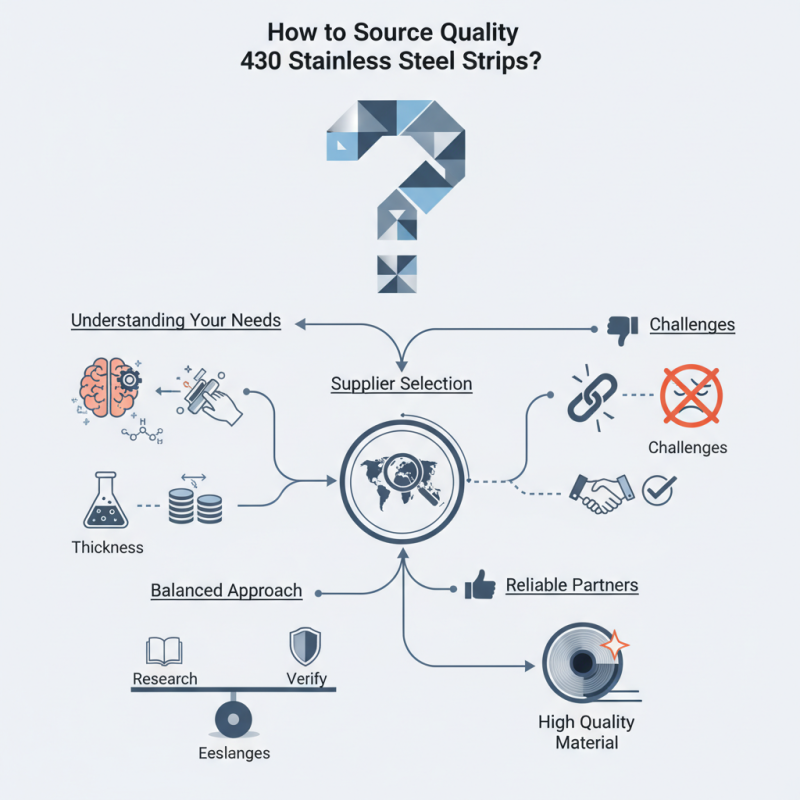
The selection process demands careful consideration. Factors such as chemical composition, surface finish, and thickness must be evaluated. Not all suppliers meet the same quality standards, which can lead to further complications down the line. A deeper understanding of your requirements is essential.
You may face challenges along the way. Some suppliers may promise high quality but fail to deliver. Others might provide great service but lack the specific materials you need. A balanced approach is necessary. Don't rush your decisions; take the time to research and verify potential suppliers.
Understanding 430 Stainless Steel: Properties and Applications
430 stainless steel is a ferritic grade known for its corrosion resistance and magnetic properties. It contains around 16-18% chromium and minimal nickel. This composition grants the steel durability and strength, making it suitable for various applications, including kitchen equipment and automotive parts. Its resistance to oxidation enhances its longevity in industrial settings.
The polished surface of 430 stainless steel strips provides a sleek appearance, appealing for decorative applications. However, it's essential to note that this grade is less ductile than austenitic stainless steels. While 430 offers good weldability, it is not ideal for high-stress environments. Users often find challenges in sourcing material that meets strict quality standards. Imperfections in surface finish can lead to unreliable performance in critical applications.
Choosing high-quality 430 stainless steel involves assessing suppliers thoroughly. Look for certified manufacturers with a proven track record. Ask for certifications and conduct inspections regularly. Some strips may have surface defects or inconsistencies. It's prudent to request samples before making large orders. Quality matters, especially in industries where safety and reliability are paramount.
Identifying Reliable Suppliers for 430 Stainless Steel Strips
When sourcing high-quality 430 stainless steel strips, selecting reliable suppliers is crucial. Start by evaluating their years of experience in the industry. A supplier with a long track record often has an established reputation. Check their production methods. Modern equipment and quality control systems indicate a commitment to excellence.
Look for certifications that affirm adherence to industry standards. This helps ensure the material meets specific requirements. Additionally, request samples to assess surface quality and finish. Inspect for corrosion resistance and uniformity. Quality varies, and there are sometimes inconsistencies between batches.
Engage in discussions with potential suppliers. Ask about sourcing raw materials and manufacturing processes. Transparent suppliers often show their commitment to quality. However, be cautious; some may lack proper documentation or fail to provide necessary information. Take the time to compare different suppliers. A thorough evaluation can lead to better long-term partnerships and reduce risks in sourcing. The right supplier will support your business needs effectively.
Evaluating Quality Standards for Stainless Steel Strips
When sourcing high-quality 430 stainless steel strips, evaluating quality standards is essential. The first step involves understanding the specifications of 430 stainless steel. This type of steel is known for its corrosion resistance and durability. It has a moderate tensile strength that makes it ideal for various applications, including kitchenware and automotive components.
Quality standards like ASTM and ISO play a crucial role in assessing stainless steel strips. These standards dictate chemical composition, mechanical properties, and dimensional tolerances. Ensuring that the steel meets these specifications is vital. Regular testing through methods such as ultrasonic inspections can help prevent defects. Observing the surface finish is equally important. A smooth, uniform surface often indicates better processing and quality control.
While many suppliers claim to offer high-quality products, not all may adhere to strict standards. It's necessary to conduct due diligence. Look for certifications and ask for test results. Engage with suppliers and inquire about their quality assurance processes. Understanding the manufacturing techniques and sourcing materials transparently can highlight potential quality issues. Reflecting on these aspects can ultimately lead to better sourcing decisions.
How to Source High Quality 430 Stainless Steel Strips? - Evaluating Quality Standards for Stainless Steel Strips
| Criteria | Description | Standard | Measurement |
| Chemical Composition | Proportions of key elements such as Chromium, Nickel, and Manganese in the alloy | ASTM A240 | Percentage (%) |
| Mechanical Properties | Tensile strength, yield strength, elongation | ASTM A666 | MPa, % |
| Surface Finish | Roughness of the surface measured in micrometers (µm) | ASTM A480 | Roughness Average (Ra µm) |
| Dimensional Tolerance | Thickness, width and length specifications | ASTM A480 | mm |
| Corrosion Resistance | Performance under specified corrosive environments | ASTM G48 | mm/year |
Comparing Pricing and Sourcing Options for 430 Stainless Steel
When considering 430 stainless steel strips, price and sourcing options are critical. The current market shows a range of pricing, typically between $1,500 to $3,500 per ton. This variation often correlates with quality, thickness, and supplier reputation. Suppliers that offer certifications, such as ISO 9001, ensure a reliable quality assurance process. However, price should not be the only factor.
Sourcing can significantly impact costs. Domestic suppliers may offer higher quality due to stricter regulations. However, many buyers still explore international markets for lower prices. Reports indicate that sourcing from Asia can save up to 20% on material costs. Yet, risks accompany this approach. Long lead times and potential quality inconsistencies could lead to increased costs in the long run.
Evaluating suppliers based on their experience in the industry matters. Experienced suppliers often have better quality control measures. Studies suggest that around 40% of sourcing failures stem from quality issues. A careful analysis of potential partners and thorough questioning about their processes is essential to avoid missteps. It’s also wise to request samples before making larger commitments.
Best Practices for Handling and Storing 430 Stainless Steel Strips
When handling 430 stainless steel strips, proper care and storage are crucial. This material is known for its corrosion resistance and durability, but it is prone to scratches if not managed well. Industry reports indicate that improper storage can lead to financial losses up to 20% due to material damage. Keeping these strips in a clean, dry environment is essential. Use moisture-absorbing materials to combat humidity and prevent rust formation.
Transporting stainless steel strips should also be done with caution. Using protective covers can reduce the risk of scratches and other damages during transit. Did you know that over 15% of stainless steel product damage occurs during handling? This highlights the importance of using suitable forklifts and padding materials. Workers should be trained in proper lifting techniques. Improper handling techniques can lead to accidents and injuries.
Finally, inventory management plays a vital role in maintaining quality. Regularly inspect your stored strips for signs of deterioration. Implementing a first-in, first-out (FIFO) approach can ensure that older material is used before it degrades. Most experts recommend an inspection every three months to identify potential issues early. This attention to detail can significantly enhance the integrity of your stainless steel strips and ultimately impact your production efficiency.
Quality Comparison of 430 Stainless Steel Strips