What Is a Terrain Cart and How Does It Work?
A Terrain Cart is a compact vehicle designed to carry people, tools, or materials across uneven ground. It may use large pneumatic tires, tracked wheels, or a reinforced suspension system. Unlike a standard utility cart, it is built for loose soil, gravel, slopes, and shallow obstacles. Its design begins with stability, not speed.
The cart works through a coordinated power system. An electric motor or small engine turns the drive wheels through a gearbox. Low gearing increases pulling force when the surface becomes soft or steep. The suspension absorbs repeated impacts, while deep-tread tires improve grip on mud and stones. Some models include all-wheel drive, differential locks, or remote controls. These features help operators maintain control when visibility or footing is limited.
Real-world performance depends on weight, slope angle, weather, and maintenance. A cart that performs well on dry grass may struggle in wet clay. That limitation matters. Before operation, inspect tire pressure, brakes, steering, battery levels, and load restraints. Keep the center of gravity low, especially on hills. Manufacturers’ capacity ratings should guide every decision, because appearance can be misleading. The explanation here is practical, but no general guide replaces the owner’s manual or hands-on training. A careful operator watches changing ground conditions and adjusts speed accordingly. Small mistakes can become expensive repairs. With realistic expectations and regular inspection, a Terrain Cart can provide dependable transport where ordinary vehicles become awkward or unsafe.
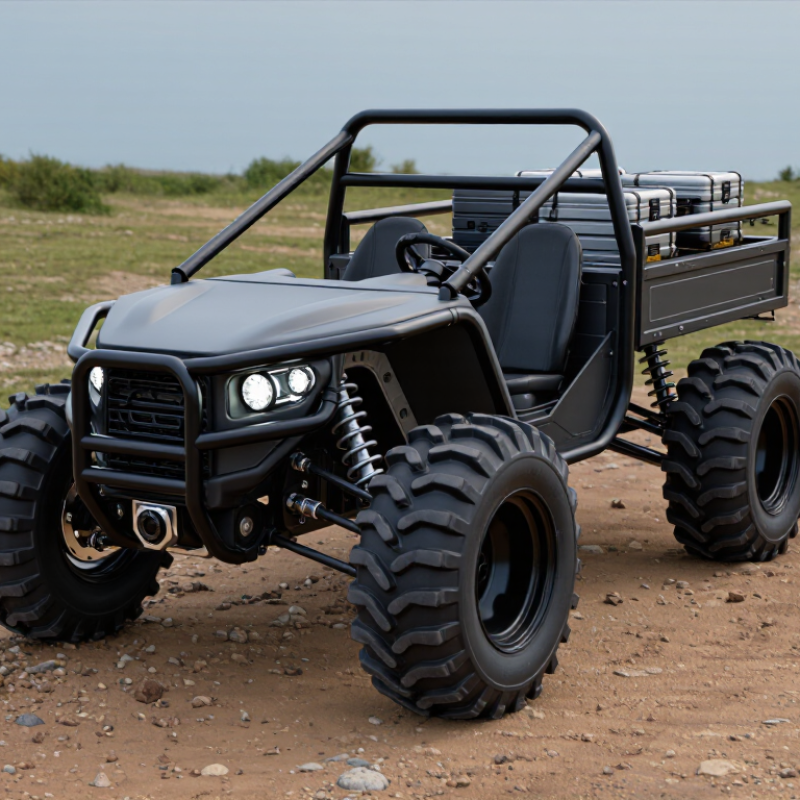
Definition and Purpose of a Terrain Cart
A terrain cart is a wheeled transport vehicle designed to move supplies across uneven ground. Unlike a standard utility cart, it uses rugged tires, stronger ground clearance, and a reinforced frame. Its purpose is practical: carrying tools, water, equipment, or materials where ordinary vehicles may struggle. Farms, parks, construction sites, and outdoor maintenance teams often use this type of cart.
The cart works by combining traction, balance, and controlled power. Its tires spread weight across soft soil, gravel, grass, or shallow mud. A low center of gravity helps reduce tipping on sloped paths. Some models use electric motors, while others rely on manual pushing or towing. Brakes, load rails, and suspension systems can improve control when the path becomes rough. Keep the load centered. That detail matters.
Choosing a terrain cart requires more than checking its maximum capacity. Wheel size, turning radius, slope limits, and surface conditions affect real performance. A cart rated for heavy loads may still perform poorly on wet clay or loose stones. In practical use, operators should inspect tire pressure, fasteners, and brakes before each trip. I have found that simple maintenance often matters more than impressive specifications. The definition sounds straightforward, but conditions change quickly. A careful user should still question whether the cart suits the route, load, and weather.

Key Components and Design Features
A terrain cart is a compact vehicle or hauling platform designed to move across uneven ground. Unlike a standard utility cart, it uses features that support traction, stability, and controlled handling on gravel, mud, grass, and gentle slopes. Its usefulness depends less on appearance than on how its components work together.
The frame forms the cart’s structural foundation. A rigid frame reduces twisting when one wheel crosses a rock, although excessive stiffness can make the ride harsh. Large, deeply patterned tires improve grip and help the cart roll over loose soil. Suspension systems absorb shocks, but they also add weight and maintenance points. Ground clearance matters too. A low chassis may feel stable, yet it can scrape easily on roots and stones.
Power may come from an electric motor or a small combustion system, depending on the intended workload. The drivetrain transfers power to the wheels, while low gearing provides better control during climbs. Reliable brakes are essential, especially when carrying tools or heavy materials downhill. A wide wheelbase and a low cargo bed help prevent tipping. Practical details matter: sealed electrical connections, protected controls, drainage holes, and an easy-to-clean bed can improve long-term reliability. I would still inspect fasteners after rough use. Vibration can loosen parts unexpectedly. No terrain cart is perfect, and a higher payload rating does not guarantee safe operation on steep or slippery ground. Expect trade-offs.
What Is a Terrain Cart and How Does It Work? - Key Components and Design Features
| Category | Component or Design Feature | Typical Specification or Characteristic | How It Works | Practical Benefit |
|---|---|---|---|---|
| Definition | Terrain Cart | A manually pushed, towed, or powered cart designed for uneven outdoor surfaces | It carries people, tools, supplies, or equipment across surfaces such as gravel, grass, soil, and inclines. | Provides more stable and efficient transport than carrying loads by hand. |
| Load Support | Load Bed or Platform | Flat deck, tray, box, or enclosed compartment sized for the intended cargo | The platform distributes cargo weight across the frame and wheel system. | Keeps items organized and reduces the risk of dropping or shifting loads. |
| Structure | Main Frame | Rigid steel or aluminum framework with reinforced joints and mounting points | The frame connects the load platform, axle, handles, suspension, and optional power system. | Maintains structural strength while controlling flex and vibration. |
| Mobility | Large, Wide-Tread Wheels | Pneumatic or semi-pneumatic tires with a larger diameter and wider tread than indoor cart wheels | The tires spread contact pressure and roll over small rocks, roots, ruts, and soft ground. | Improves traction, ground clearance, and ride comfort on uneven terrain. |
| Wheel Layout | Two-, Three-, or Four-Wheel Configuration | Two wheels improve maneuverability; three or four wheels provide additional stability | The wheel arrangement determines how the cart balances, turns, and distributes its load. | Allows the design to match narrow paths, heavy loads, or sloped ground. |
| Handling | Handlebars or Tow Connection | Ergonomic handles for manual control or a hitch for attachment to a towing vehicle | The operator applies pushing, pulling, steering, or towing force through the control connection. | Improves directional control and reduces awkward lifting. |
| Power System | Electric Motor and Battery | Optional battery-powered drive system with motor controller and rechargeable battery pack | Electrical energy is converted into wheel torque to assist movement, especially on inclines or with heavy loads. | Reduces physical effort and provides more consistent uphill performance. |
| Traction | Differential or Geared Drive | Low-speed gearing or differential drive on powered models | Gearing increases wheel torque, while a differential allows driven wheels to rotate at different speeds during turns. | Improves control, turning performance, and movement over rough ground. |
| Ride Quality | Suspension or Flexible Mounts | Leaf springs, coil springs, elastomer mounts, or independently compliant wheels; optional on basic carts | Suspension absorbs part of the shock caused by bumps and uneven ground. | Protects cargo and improves operator comfort and wheel contact. |
| Stability | Low Center of Gravity | Heavy components positioned low in the chassis; load platform kept close to the axle line where practical | Lowering the center of gravity reduces the tipping moment during turns and on slopes. | Helps maintain balance when transporting unevenly distributed loads. |
| Braking | Service and Parking Brake | Mechanical, drum, disc, regenerative, or electric braking depending on the design | The brake system slows wheel rotation and can hold the cart stationary when parked. | Improves control on descents and helps prevent unintended movement. |
| Cargo Security | Side Rails, Tie-Downs, or Retaining Panels | Raised sides, straps, hooks, anchor points, or removable panels | These features restrain cargo against sliding, rolling, or falling during travel. | Reduces cargo loss and allows safer transport over bumps and slopes. |
| Ground Clearance | Raised Undercarriage | Clearance determined by tire diameter, axle placement, and chassis geometry | The space beneath the frame allows the cart to pass over minor obstacles without striking the chassis. | Decreases snagging and underbody impact on rough paths. |
| Weather Resistance | Protective Finishes and Sealed Components | Powder-coated or corrosion-resistant frame surfaces; sealed bearings and protected electrical connections where required | Protective materials limit moisture, dirt, and corrosion damage during outdoor use. | Extends service life and reduces maintenance in exposed environments. |
| Operator Control | Speed, Direction, and Emergency Controls | Throttle, direction selector, brake control, emergency stop, or manual steering mechanism on powered versions | The controls regulate propulsion and allow the operator to stop or change direction. | Supports precise low-speed operation and safer handling around people and obstacles. |
| Typical Applications | Outdoor Material and Equipment Transport | Landscaping, agriculture, construction support, parks, maintenance, recreation, and remote-site logistics | The cart is selected according to payload, terrain type, travel distance, slope, and required operator effort. | Provides a flexible transport solution where standard indoor carts or hand carrying are unsuitable. |
Note: Specifications vary by cart type, payload rating, wheel arrangement, terrain conditions, and whether the cart is manually operated, towed, or motorized.
How a Terrain Cart Operates on Uneven Ground
What Is a Terrain Cart and How Does It Work?
How a Terrain Cart Operates on Uneven Ground
A terrain cart is designed to move loads across gravel, grass, mud, and broken paths. Its operation begins with traction. Large, widely spaced wheels press into the surface and reduce sinking. Some models use low-pressure tires, while others rely on deep tread patterns. The ground fights back.
On uneven ground, the cart’s frame and wheel system must absorb constant changes in height. A suspension system allows each wheel to rise or drop without lifting the whole load. Articulated joints can help the chassis follow slopes and shallow dips. A low center of gravity improves stability, especially when the cart carries tools or materials. In my experience, even small weight shifts can change steering behavior. Load placement matters more than many operators expect.
Powered terrain carts usually use electric motors connected to one or more drive wheels. Sensors or mechanical controls adjust speed and torque when resistance increases. Slow, steady movement gives the tires time to grip loose soil. Sudden acceleration often causes wheel spin. That wastes energy and may damage the surface. Operators should inspect tire pressure, fasteners, brakes, and battery condition before traveling over rough ground. No setup is perfect. Wet clay, hidden stones, and steep cross-slopes can still exceed a cart’s practical limits. A careful test run reveals problems earlier than a full load.
Types of Terrain Carts and Their Common Uses
What Is a Terrain Cart and How Does It Work?
Types of Terrain Carts and Their Common Uses
A terrain cart is a compact vehicle designed for uneven ground, loose soil, and narrow access routes. It usually combines deep-tread tires, strong suspension, low gearing, and controlled ground clearance. Electric or combustion power turns the wheels through a geared drivetrain. A differential helps each wheel rotate at different speeds during turns. Some models also use four-wheel drive for mud, gravel, or steep grass.
Terrain carts differ by task. Manual platform carts suit gardens, warehouses, and short-distance material movement. Motorized utility carts carry tools, water tanks, or light equipment across farms and large properties. Dump-bed carts help with soil, mulch, and construction debris. Passenger versions support campuses, resorts, and outdoor facilities. Tracked carts work better on sand, snow, or soft ground, although they may move more slowly. They are not magic.
Grand View Research estimated the global golf cart market at about US$1.9 billion in 2023, with continued growth expected through 2030. This broader category reflects rising interest in compact, low-speed transport. The International Energy Agency reported nearly 14 million electric car sales in 2023, reinforcing wider confidence in electric drivetrains. However, terrain work demands more than battery capacity. Operators should check payload, slope limits, braking distance, tire pressure, and charging access. In real field use, a cart can perform well on gravel but struggle after heavy rain. Specifications do not always match the ground.
Safety, Maintenance, and Operating Considerations
A terrain cart is a compact utility vehicle designed for uneven ground, gravel, grass, and moderate slopes. It usually combines a low-speed drive system, rugged tires, suspension, and a cargo bed. Electric models require battery power, while fuel-powered models use an engine and transmission. On a worksite, the cart’s stability depends on more than its tires. Load position, slope angle, braking response, and ground conditions all matter.
Safety deserves daily attention. OSHA estimates that powered industrial trucks cause about 35,000 serious injuries and 85 deaths annually in the United States. A terrain cart is not automatically covered by every forklift rule, but this figure shows the cost of poor vehicle control. Keep loads low, centered, and secured. Reduce speed before turns. Never carry passengers unless approved seating exists. Seat belts matter on sloped ground. So does pedestrian separation. The ANSI/ITSDF B56.8 standard provides useful guidance for personnel and burden carriers, including braking, steering, and operator protection.
Maintenance should be practical, not ceremonial. Inspect tire pressure, tread, wheel nuts, brakes, steering, lights, and frame damage before use. Check battery connections and charging areas. Keep the cargo bed clear. Small defects become serious on wet slopes. Operators often skip the pre-use inspection when production is busy. That shortcut is difficult to defend. A checklist helps, but it cannot replace training, weather judgment, or a willingness to stop the cart when its behavior feels different.