China Top 10 Warehouse Racking Manufacturers?
China’s warehouse equipment industry serves factories, distributors, retailers, and logistics providers worldwide. Among its strongest segments, Warehouse Racking manufacturers offer pallet racks, cantilever systems, drive-in storage, mezzanines, and automated solutions. This guide introduces ten notable Chinese suppliers and explains why they deserve attention.
The selection considers manufacturing capacity, material quality, engineering support, certifications, project experience, and export performance. Practical details matter. A reliable supplier should provide accurate load calculations, clear drawings, stable welding, and consistent powder coating. Communication also deserves scrutiny. Delayed replies can become expensive during installation.
These companies are not identical. Some focus on heavy-duty industrial projects, while others serve smaller warehouses with flexible configurations. Pricing may look attractive, yet steel thickness, beam design, packaging, and after-sales service can change the final cost. Buyers should request current test reports, references, factory photos, and detailed quotations before choosing.
Rankings remain subjective. Market data changes. That deserves reflection.
A manufacturer with impressive equipment may still struggle with project coordination. Another supplier may have fewer global references but offer stronger technical support. This article therefore avoids treating one ranking as permanent truth. Instead, it provides a practical comparison framework for evaluating China’s top Warehouse Racking manufacturers with greater confidence, caution, and professional judgment.
China’s Warehouse Racking Market: Capacity, CAGR, and 2024 Demand Data
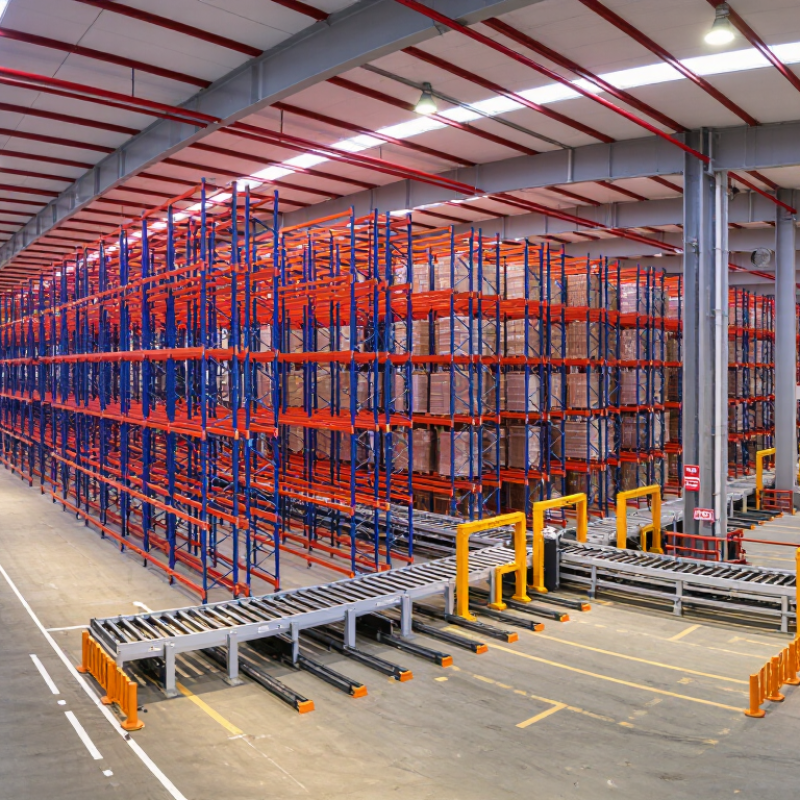
China’s warehouse racking market expanded steadily in 2024, supported by e-commerce, cold-chain logistics, manufacturing upgrades, and automated warehouses. Public industry estimates place annual market value between RMB 35 billion and RMB 45 billion. Figures vary because some reports include automation equipment, while others count steel racking only.
The production base is substantial. Leading Chinese manufacturers can collectively supply several million tonnes of racking systems each year, with capacity concentrated in coastal manufacturing provinces. In 2024, demand for new pallet positions likely reached 8 million to 12 million, although this range needs careful verification. Some projects were delayed by financing pressure and slower property-related logistics demand. That detail matters.
Market forecasts commonly indicate a compound annual growth rate of 8% to 10% through the late 2020s. Demand is strongest for selective pallet racks, drive-in systems, carton-flow racks, and shuttle-supported storage. Automated warehouses are also increasing, but not every site needs them. A practical assessment should compare load data, aisle width, floor tolerance, fire protection, and local installation experience.
For a “top 10” manufacturer list, purchasing teams should examine tested load capacity, welding quality, coating thickness, project references, delivery capability, and after-sales response. Factory visits reveal useful details, such as beam deformation controls and packaging discipline. Certification helps. It does not replace inspection. Some published capacity figures are optimistic, so buyers should request audited production data, recent delivery records, and independent structural calculations.
Ranking the Top 10 Manufacturers by Revenue, Output, Exports, and Projects
China’s warehouse racking sector is expanding with logistics demand. The China Federation of Logistics and Purchasing reported total social logistics value of RMB 352.4 trillion in 2023. That scale supports strong demand for pallet racks, shuttle systems, mezzanines, and automated storage projects. The International Federation of Robotics also recorded 276,288 industrial robot installations in China during 2023, representing about 51% of global installations. Automation is changing how racking manufacturers compete.
A reliable top-ten ranking should combine revenue, production output, export value, and completed projects. Revenue shows commercial strength, but it can hide subcontracting or unusually large contracts. Output measures factory capacity, while exports reveal international acceptance and compliance experience. Project records provide practical evidence, especially for high-density warehouses and cold-chain facilities.
Interact Analysis estimated the global warehouse automation market at more than US$20 billion in 2023, with continued growth expected through 2028. The MHI 2024 Annual Industry Report also found that 55% of supply-chain leaders planned increased technology investment. Growth is clear.
Still, the ranking needs caution. Public data often mixes racking, software, conveyors, and robotics. That weakens direct comparisons. Some project figures are self-reported. A fair evaluation should verify audited revenue, installed capacity, export destinations, safety certifications, and reference sites. Small errors remain possible. Data quality matters.
Product Comparison: Load Capacity, Rack Height, Aisle Width, and Storage Density
China Top 10 Warehouse Racking Manufacturers: Product Comparison
Comparing China’s top warehouse racking manufacturers requires more than checking price. Load capacity reveals steel quality, beam design, and manufacturing control. A pallet rack rated for 1,000 kilograms per level may suit light goods, but heavier loads need stronger frames and verified testing.
Rack height affects storage volume and equipment choice. A 12-meter system uses vertical space efficiently, yet it may require specialized forklifts and stricter installation checks. Aisle width also changes productivity. Narrow aisles increase storage density, but operators need suitable trucks and accurate navigation. Small measurement errors can create daily delays.
Tips: Request load tables, steel specifications, coating details, and installation tolerances. Compare usable capacity, not only the advertised maximum. Measure pallets, forklifts, columns, and sprinkler clearance before selecting a design. Push-back and drive-in systems can improve density, while selective racks usually provide faster access. However, higher density is not always better. In busy facilities, restricted access can increase handling time. I have seen layouts look efficient on paper but perform poorly after real traffic patterns appear. A practical trial bay can expose those weaknesses before full installation. Verify production samples, inspection records, and after-sales response times. Local engineering support may matter as much as the rack itself.
China Top 10 Warehouse Racking Manufacturers? - Product Comparison: Load Capacity, Rack Height, Aisle Width, and Storage Density
Supplier-neutral comparison of ten commonly offered warehouse racking configurations in the Chinese market. Values are typical engineering ranges and must be confirmed through a project-specific structural design.
| Product / System Category | Typical Load Capacity | Typical Rack Height | Recommended Aisle Width | Approx. Storage Density | Best-Fit Applications | Main Design Considerations |
|---|---|---|---|---|---|---|
| Light-Duty Boltless Shelving | 100–300 kg per level | 1.8–3.0 m | 0.9–1.2 m | Low to medium Approximately 35–50% |
Hand-loaded cartons, spare parts, archives, and small-item storage | Manual handling; relatively fast installation; limited suitability for heavy pallets or high-bay operations |
| Medium-Duty Longspan Shelving | 300–800 kg per level | 2.0–4.0 m | 1.0–1.5 m | Medium Approximately 40–55% |
Bulky cartons, tools, industrial components, and manual picking areas | Beam span, shelf deflection, and manual access height should be checked for each SKU profile |
| Selective Pallet Racking | 800–4,500 kg per bay level | 3.0–12.0 m | 3.0–3.8 m | Medium Approximately 40–55% |
High-SKU warehouses requiring direct access to every pallet | Offers the highest selectivity; forklift type, pallet dimensions, beam levels, and floor loading are critical |
| Narrow-Aisle Pallet Racking | 800–4,000 kg per bay level | 6.0–14.0 m | 1.6–2.0 m | Medium-high Approximately 55–70% |
High-density pallet storage with frequent access and high stock variety | Usually requires specialized turret or articulated forklifts and accurate floor flatness |
| Double-Deep Pallet Racking | 1,500–4,500 kg per bay level | 5.0–12.0 m | 3.0–3.8 m | High Approximately 55–70% |
Moderate-SKU inventories with multiple pallets per product | Improves density over selective racking but reduces immediate access to rear pallets; requires reach trucks with telescopic capability |
| Drive-In / Drive-Through Racking | 800–2,000 kg per pallet position | 4.0–10.0 m | 3.5–4.5 m at operating aisles | Very high Approximately 65–85% |
Large quantities of uniform products using last-in, first-out or first-in, first-out processes | Lower selectivity; rack protection, rail alignment, forklift control, and pallet consistency are essential |
| Push-Back Pallet Racking | 800–2,000 kg per pallet position | 4.0–10.0 m | 3.0–3.8 m | High Approximately 60–75% |
High-volume products requiring multiple pallets per SKU and reduced aisle space | Typically follows last-in, first-out storage; pallet quality, trolley design, and lane depth affect performance |
| Pallet Flow Racking | 500–1,500 kg per pallet position | 4.0–10.0 m | 3.0–4.0 m | High Approximately 60–80% |
Perishable goods, date-sensitive inventory, and first-in, first-out distribution | Requires consistent pallet dimensions, controlled loading speeds, roller maintenance, and dedicated loading and picking faces |
| Cantilever Racking | 300–2,500 kg per arm | 3.0–8.0 m | 2.5–4.0 m | Low to medium Approximately 30–50% |
Long loads such as steel profiles, timber, pipes, furniture, and construction materials | Arm length, column spacing, load overhang, floor anchoring, and impact protection require careful engineering |
| Automated High-Bay Pallet Racking | 500–1,500 kg per pallet position | 12.0–40.0 m | 1.5–2.0 m machine aisle | Very high Approximately 70–90% |
Large distribution centers requiring high throughput, traceability, and reduced manual handling | Needs warehouse control software, stable power, high floor flatness, fire-safety coordination, and significant capital investment |
Note: Storage density is an indicative floor-space utilization range compared with a conventional selective-pallet-racking layout. Actual results vary with pallet size, SKU count, inventory turnover, building height, forklift specifications, fire-code requirements, seismic conditions, and local design standards.
Technology Review: Selective, Drive-In, Pallet Flow, Shuttle, and AS/RS Systems
China Top 10 Warehouse Racking Manufacturers?
A top-ten list should begin with technology, not appearance. In practical site reviews, selective racking remains the safest baseline. It offers direct access to every pallet and supports changing stock profiles. However, its aisles consume valuable floor area. Drive-in racking increases density, often storing four to ten pallets deep. It suits stable, homogeneous products with limited stock-keeping units. It is not ideal for frequent picking. Pallet flow systems support FIFO movement through gravity lanes. They require accurate pallet dimensions and disciplined loading. Small variations can cause jams. That detail is often underestimated.
Shuttle racking adds motorized pallet movement while retaining flexible channel storage. It can reduce forklift travel and improve operator safety, but battery management needs careful planning. AS/RS systems provide high storage density, controlled inventory, and measurable retrieval performance. They also demand reliable software, stable floors, and trained maintenance teams. MHI’s 2024 Annual Industry Report reported that 55% of respondents expected increased supply-chain technology investment within two years. Interact Analysis also identifies warehouse automation as a strong growth market, driven by labor pressure and fulfillment speed. Yet automation alone does not fix poor slotting. It may amplify it. Manufacturers should therefore disclose load ratings, seismic design assumptions, throughput tests, maintenance intervals, and integration limits. The best comparison uses measured pallets per hour, retrieval accuracy, aisle utilization, and total lifecycle cost. Marketing claims rarely reveal these weaknesses.
Warehouse Racking Technology Review
Comparative assessment of five major warehouse storage technologies. Scores use a 1–5 industry reference scale based on standard system characteristics: 1 = low and 5 = high. The index is technology-based and does not represent any manufacturer or brand.
Selective racking provides the highest direct pallet accessibility, while drive-in systems prioritize density. Pallet flow supports FIFO operations, shuttle systems combine high density with semi-automation, and AS/RS delivers the strongest automation capability when integrated with warehouse control software.
Compliance and Safety: GB, EN 15635, FEM, Seismic Design, and ROI Metrics
China Top 10 Warehouse Racking Manufacturers?
A credible shortlist should begin with compliance, not price. Chinese projects must match applicable GB structural, loading, fire, and seismic requirements. EN 15635 adds operational inspection duties, including regular checks for bent frames, loose beams, and damaged protectors. FEM guidance supports load assumptions, frame design, and safe working limits. In site audits, impact damage often creates greater risk than initial design errors. Seismic design also needs soil data, building movement, anchor strength, and local hazard parameters. A generic quotation cannot prove safe performance.
Tips: Request stamped calculations, material certificates, load plaques, and installation records. Ask for an inspection plan with clear defect grades. Compare suppliers using cost per pallet position, usable volume, picking throughput, damage rate, and annual maintenance cost.
The 2024 MHI Annual Industry Report reported that 55% of respondents planned to increase technology investment within two years. That supports automation, but automation does not repair weak layouts. ROI should include downtime, training, energy use, and future expansion. A three-year payback can look attractive, yet poor access may quietly reduce productivity. That part is easy to miss. Internal data should be tested against real shift volumes, not optimistic forecasts.
Related Posts
-
Maximizing Efficiency with Best Warehouse Racking Installation Standards and Techniques
-
Ultimate Guide to Choosing the Best Commercial Racking Systems for Your Business
-
Exploring Innovative Alternatives to Traditional Warehouse Racking Systems
-
The Complete Handbook for Choosing the Best Industrial Racking Systems
-
Unlocking Efficiency: How Pallet Racking Systems Revolutionize Warehouse Management
-
Global Service and Excellence in Manufacturing the Best Teardrop Pallet Rack from China