China Top Idler Arm Manufacturers Where to Buy?
China has become a major sourcing base for steering and suspension components. Among these products, the Idler Arm deserves careful attention. It supports the center link and helps maintain accurate wheel movement. A weak part may create wandering steering, uneven tire wear, or dangerous looseness.
Tom Denton, an automotive engineering author and trainer, states, “Good steering depends on correct geometry, not appearance alone.” This principle matters when comparing Chinese manufacturers. A polished catalog cannot prove reliable performance. Buyers should examine OE references, material specifications, machining accuracy, and bushing quality. They should also request dimensional drawings and product samples before placing larger orders.
The strongest manufacturers usually provide traceable inspections, stable packaging, and documented quality systems. Certifications such as IATF 16949 or ISO 9001 can support evaluation, but certificates should be verified. They are not magic proof. Ask whether the supplier controls forging, heat treatment, coating, and final assembly. Check the ball stud hardness and grease protection. Small details often decide service life.
Where to buy depends on your purchasing goals. Direct factory sourcing may offer better pricing and technical communication. Established automotive marketplaces may provide wider comparisons and buyer protection. Local distributors can simplify delivery and warranty handling. Each option has trade-offs.
Do not choose by price alone. That mistake is common. Compare test reports, minimum order quantities, lead times, and replacement policies. I would also admit one limitation: online information can be incomplete or outdated. A factory audit, independent inspection, or trial order remains valuable. The right Idler Arm supplier should make verification easy, not uncomfortable.
What Is an Idler Arm and How Does It Support Steering?
An idler arm is a steering linkage support fitted opposite the pitman arm. It connects the center link to the vehicle frame. Its pivot allows the linkage to move while keeping the steering geometry stable. Without this support, the center link can sag, twist, or move unpredictably. It is not decorative. The part works quietly beneath the vehicle, carrying repeated loads during turning, braking, and uneven-road driving.
In practical inspections, excessive idler arm play often appears as loose steering, wandering, or uneven front-tire wear. A technician should lift the front axle safely and check vertical and lateral movement at the joint. Small wear matters. A damaged bushing may also create a dull knocking sound near the wheel.
I once underestimated slight movement during a quick inspection; a second check showed that the play was affecting toe alignment. That experience reinforced a simple lesson: visual inspection alone is not enough.
When evaluating idler arm manufacturers in China, buyers should request accurate vehicle applications, material specifications, load-test records, and dimensional reports. Ask how pivot bushings are tested and whether corrosion protection suits the intended environment. Fitment is critical. A part can look identical yet use the wrong taper, mounting height, or stud angle. After installation, fasteners must follow the vehicle maker’s torque requirements, and a steering alignment check should be completed. Suppliers that provide traceable batch information and responsive technical support are easier to assess when a fitment question appears.

Key Features to Compare in China-Made Idler Arms
China Top Idler Arm Manufacturers Where to Buy?
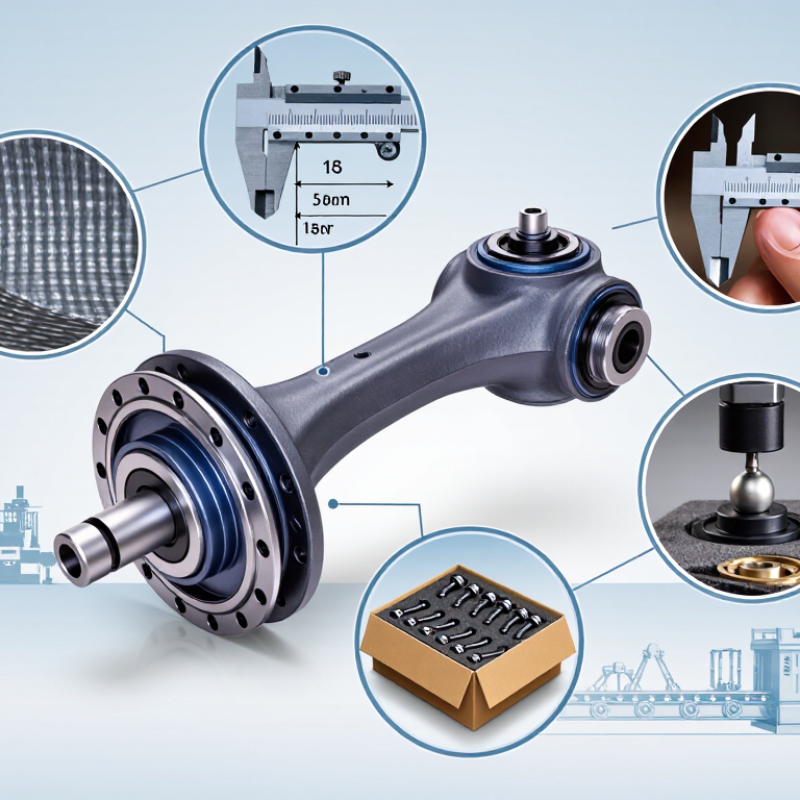
When comparing China-made idler arms, start with dimensional accuracy, not the catalog price. Measure the mounting holes, shaft diameter, arm length, and taper before ordering samples. A small mismatch can cause steering play or difficult installation. Ask the manufacturer for material specifications, heat-treatment records, and hardness results. Forged steel usually offers better resistance to repeated loads, but steel grade alone proves little. Machining quality and heat treatment matter just as much.
Inspect the ball joint, bushings, seals, and grease protection closely. The joint should move smoothly without looseness or rough spots. Bushings need firm support, yet they should not crack when twisted by hand. Check coating thickness on exposed surfaces, especially around machined edges and drain areas. Salt-spray data can help, although laboratory hours may not match road conditions. Request sample inspection reports, batch traceability, and a clear replacement process for defective parts.
A reliable factory should explain tolerances in plain language and accept third-party inspection. Some suppliers provide polished samples that hide inconsistent production. I have seen this mistake delay a shipment by weeks. Comparing only unit prices is another expensive lesson. Ask about packaging, carton strength, and rust prevention during ocean transport. The best buying decision usually comes from comparing test evidence, production control, communication speed, and actual sample performance together.
Leading China Idler Arm Manufacturers and Their Product Strengths
China Top Idler Arm Manufacturers Where to Buy?
Leading Chinese idler arm manufacturers serve passenger cars, light trucks, and commercial vehicles. Their main strengths include forged steel construction, accurate machining, and controlled heat treatment. Many factories use CNC equipment to maintain consistent bore dimensions and taper angles. This matters when the steering system needs stable movement and limited play.
Some manufacturers offer complete idler arms with bushings, grease fittings, dust boots, and mounting hardware. Others produce replacement parts according to original drawings or samples. Buyers can source directly from factory websites, industrial exhibitions, export offices, or verified B2B marketplaces. Direct purchasing may reduce costs, but communication and inspection require patience. Small mistakes happen.
A reliable supplier should provide material certificates, dimensional reports, load-test records, and clear packaging photographs. Ask about minimum order quantities, production lead time, warranty terms, and replacement procedures. A pre-shipment inspection can check thread quality, surface finish, bushing hardness, and corrosion protection. Samples should be tested on the intended vehicle platform before larger orders. Not every polished catalog reflects strong production control. Factory visits, third-party audits, and traceable export documents create better purchasing confidence.
Where to Buy Idler Arms from Chinese Suppliers
When buying idler arms from Chinese suppliers, begin with verified industrial directories, trade exhibitions, or direct factory websites. Ask whether the seller manufactures the part or represents another workshop. Request production photos, facility details, and recent quality records. A video tour helps, but it is not proof. I would also check machining equipment, heat-treatment control, assembly processes, and final inspection methods. Small details matter, such as clean splines, consistent bushings, and rust-free protective packaging. Some suppliers respond quickly but provide vague specifications. That should make a buyer pause.
Send a detailed RFQ with the vehicle application, drawing number, dimensions, material, coating, load requirements, tolerance range, and expected quantity. Request a pre-production sample before placing a large order. Measure the sample independently, especially the shaft diameter, mounting-hole position, and joint movement. Ask for material certificates, inspection reports, and batch traceability when available. Quality systems such as IATF 16949 may be useful, but certification alone does not guarantee every shipment. Confirm tooling ownership, lead time, replacement terms, export documents, and shipping conditions in writing. The lowest quotation can hide weaker steel, thinner coatings, or unstable inspection control. I once underestimated packaging quality; several heavy parts arrived with surface marks after long transit. A stronger crate and separate protective sleeves would have prevented that.
China Top Idler Arm Manufacturers Where to Buy? - Where to Buy Idler Arms from Chinese Suppliers
A practical purchasing guide for sourcing automotive idler arms from Chinese suppliers
| Buying Dimension | Typical Data or Requirement | What the Buyer Should Confirm | Recommended Purchasing Evidence | Importance |
|---|---|---|---|---|
| Product Type | Steering idler arm for vehicles using a conventional linkage system; common designs use a frame-mounted pivot with a bushing or ball-joint connection. | Confirm whether the part is an idler arm, pitman arm, center link, or complete steering linkage assembly. | Technical drawing, product photograph, OE reference number, and vehicle application list. | Critical |
| Vehicle Fitment | Fitment should be matched by vehicle make, model, model year, engine, drive type, and steering configuration. | Check left-hand-drive or right-hand-drive requirements and whether the vehicle uses two-wheel drive or four-wheel drive. | VIN-based verification, catalog cross-reference, or dimensional comparison with the original part. | Critical |
| Mounting Geometry | Key dimensions include pivot-center spacing, mounting-hole diameter, stud taper, arm angle, and overall length. | Require tolerance information for all dimensions that affect steering alignment and installation. | 2D drawing with tolerances, inspection report, and sample approval record. | Critical |
| Body Material | Common production materials include forged or cast steel, depending on the design and load requirements. | Confirm material grade, heat-treatment process, hardness range, and traceability of raw material. | Material certificate, heat-treatment record, and batch traceability document. | High |
| Ball Stud Material | Ball studs are generally manufactured from hardened alloy steel or other specified automotive-grade steel. | Confirm surface hardness, core hardness, dimensional accuracy, and resistance to wear. | Hardness test report, dimensional inspection report, and metallurgical certificate when required. | High |
| Bushing or Joint Design | Available configurations may include rubber bushings, polymer bushings, or sealed ball joints. | Check rubber or polymer compound, sealing design, grease retention, articulation angle, and operating temperature range. | Construction specification, supplier drawing, durability test results, and sample inspection. | High |
| Corrosion Protection | Typical protection methods include zinc-based plating, phosphate treatment, painted surfaces, or other specified coatings. | Confirm coating type, thickness, appearance requirements, and corrosion-test method. | Coating certificate, salt-spray test report, and packaging inspection photographs. | Medium |
| Quality Inspection | Important checks include dimensional inspection, articulation torque, pull-out strength, hardness, surface defects, and assembly integrity. | Agree on sampling standards, defect classification, critical dimensions, and acceptance criteria before production. | Approved quality-control plan, pre-shipment inspection report, and retained samples. | Critical |
| Minimum Order Quantity | MOQ varies by design, tooling requirement, packaging method, and whether the item is already in production. | Ask for separate quantities for sample orders, standard production orders, and custom development. | Written quotation showing MOQ, sample cost, tooling cost, and price breaks. | High |
| Sample Process | A production sample should be checked before bulk manufacturing, especially for steering and suspension components. | Confirm sample lead time, sample quantity, revision control, and whether the sample uses final production materials. | Sample approval form, signed drawing, inspection checklist, and comparison measurements. | Critical |
| Production Lead Time | Lead time depends on tooling, raw-material availability, order volume, inspection requirements, and export packaging. | Request separate timelines for tooling, samples, mass production, and final inspection. | Purchase contract with milestone dates and a written delay-notification procedure. | High |
| Packaging | Typical export packaging includes individual protection, labeled inner boxes, carton packing, and palletization when required. | Confirm corrosion prevention, barcode or part-number labeling, carton strength, and quantity per carton. | Packaging specification, carton marking artwork, and pre-shipment packaging photographs. | Medium |
| Supplier Verification | Suppliers should be verified for legal registration, manufacturing capability, quality systems, and export experience. | Distinguish a factory from a trading company and confirm which processes are outsourced. | Business license, factory audit, production-line photographs, quality certificates, and customer references. | Critical |
| Compliance Documentation | Documents may include material certificates, inspection reports, declarations, and market-specific product information. | Identify the legal and technical requirements of the destination market before placing the order. | Document checklist included in the purchase agreement and final shipping package. | High |
| Shipping Terms | Common international trade terms include EXW, FOB, CIF, and DDP, subject to the agreed destination and responsibilities. | Compare product price, inland transport, export handling, freight, insurance, duties, and delivery responsibility. | Itemized quotation showing Incoterm, port or destination, freight validity, and insurance responsibility. | Medium |
| Warranty and Claims | Warranty terms should define the coverage period, eligible defects, evidence requirements, and replacement or credit procedure. | Clarify exclusions for incorrect installation, vehicle modification, misuse, and normal wear. | Signed warranty clause, claim-response timeline, corrective-action process, and replacement policy. | High |
How to Evaluate Quality, Compatibility, and Supplier Reliability
China Top Idler Arm Manufacturers Where to Buy?
A quality idler arm must match the vehicle’s steering geometry, load rating, and mounting dimensions. Check the OE reference, thread size, taper angle, and center-to-center length. A small mismatch can create uneven tire wear or loose steering. The 2023 U.S. National Highway Traffic Safety Administration recall data affected millions of vehicles, showing why traceability matters. Ask suppliers for batch numbers, inspection records, and material certificates. Do not rely on polished product photos.
Quality evidence should include dimensional reports, hardness testing, fatigue-test results, and corrosion protection details. ISO 9001 certification supports process control, but it does not prove every idler arm is reliable. That distinction is often missed. I would also request samples from different production batches. One sample can look excellent. It may not represent regular output.
Supplier reliability requires more than a low quotation. Review response times, warranty terms, packaging, delivery history, and corrective-action records. The 2024 Aftermarket Suppliers’ Guide from the Auto Care Association highlights the aftermarket’s scale and complexity, with U.S. automotive aftermarket sales projected to exceed 600 billion dollars by 2028. Large demand can hide weak inspection practices. A factory audit, video or in person, should examine forging, machining, assembly, and final testing. Check everything. Then check the records again.