China Best Mining Loaders Manufacturers?
Choosing the best Mining Loaders manufacturers in China requires more than comparing horsepower and purchase prices. Buyers should examine operating hours, underground dimensions, payload stability, service response, and parts availability. A loader that looks powerful in a brochure may struggle in a narrow drift with wet floors and frequent reversing.
China now offers a wide range of Mining Loaders, from established construction-equipment groups to specialized underground machinery producers. Companies such as XCMG, SANY, LiuGong, and Fambition serve different applications and budget levels. Their strengths are not identical. Some focus on scalable production, while others emphasize compact diesel or battery-electric loaders for underground mines. That difference matters.
Helena Hedblom, President and CEO of Epiroc, has said, “Innovation is at the heart of our business.” Her statement reflects a practical reality. Modern Mining Loaders must improve productivity while reducing emissions, heat, noise, and operator exposure. Battery-electric models are promising, but charging infrastructure, battery replacement, and technician training still require careful planning. This is where many comparisons become too optimistic.
The following overview evaluates Chinese manufacturers through measurable criteria, including machine design, safety systems, remote-control capability, maintenance access, warranty support, and field performance. It also considers user experience, because a loader covered in dust and oil reveals weaknesses quickly. No manufacturer is perfect. Even strong suppliers may have uneven dealer coverage or delayed parts in remote regions. Buyers should request test data, service references, and a clear total-cost estimate before making a final decision.
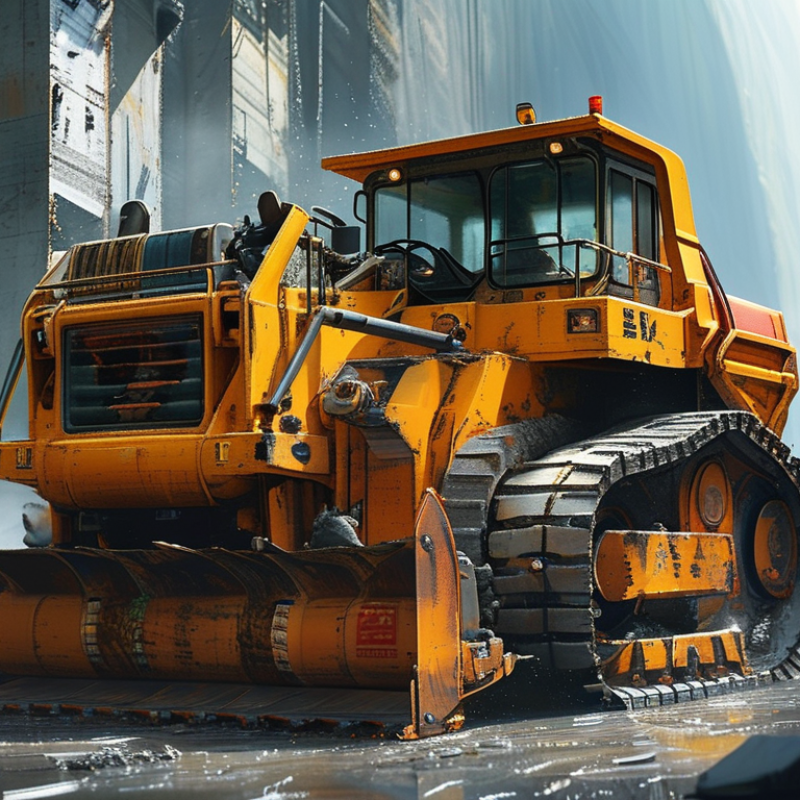
What Are Mining Loaders and How Are They Used?
Mining loaders, often called load-haul-dump machines, are compact vehicles built for underground material handling. They scoop blasted rock, carry it, and discharge it into a truck, crusher, or ore pass. Their articulated frames help them turn inside narrow tunnels. Low profiles allow access where larger equipment cannot work.
Short travel matters.
During operation, an operator lowers the bucket near the muck pile and drives forward carefully. The bucket fills through hydraulic lifting and crowding movements. The loader then reverses, travels to the dumping point, and returns for another cycle. In hard-rock mines, this repeated movement can continue for many hours. Wet floors, poor visibility, and loose rock require constant attention. Practical training remains as important as machine power.
When comparing China-based mining loader manufacturers, buyers should check bucket capacity, tramming speed, turning radius, ground clearance, and service support. Ask for test records, component information, maintenance schedules, and spare-parts availability. A machine may appear strong on paper but perform differently in cramped headings. Specs can mislead. Some capacity figures assume ideal material and level ground. I would also inspect weld quality, hydraulic hose protection, braking response, and cabin visibility. These details affect productivity and operator confidence. A reliable supplier should explain limitations clearly, not only advertise maximum output.
China Best Mining Loaders Manufacturers? - What Are Mining Loaders and How Are They Used?
| Loader Type | Typical Operating Environment | Typical Bucket Capacity | Typical Rated Payload | Common Power Systems | Primary Uses | Main Selection Considerations |
|---|---|---|---|---|---|---|
| Underground LHD Loader | Underground metal and hard-rock mines with restricted height and width | Approximately 0.75–14 m³ | Approximately 1.5–25 tonnes | Diesel-hydraulic; battery-electric and cable-electric versions are also used | Loading blasted ore, hauling it short distances, and dumping into ore passes, trucks, or crushers | Machine width, turning radius, tramming distance, ventilation capacity, ground conditions, and service access |
| Underground Narrow-Vein Loader | Narrow-vein mines and low-clearance headings | Approximately 0.4–2.5 m³ | Approximately 0.8–6 tonnes | Compact diesel or battery-electric systems | Selective ore loading and mucking where conventional LHDs cannot maneuver | Overall width, lift height, articulation angle, visibility, ground clearance, and dilution control |
| Surface Wheel Loader | Open-pit mines, stockpiles, quarries, ports, and processing plants | Approximately 2–20 m³ or more, depending on machine class | Approximately 3–40 tonnes or more | Diesel-hydraulic, with electric and hybrid options available for selected applications | Stockpile reclaiming, truck loading, material blending, hopper feeding, and cleanup | Bucket size, material density, truck matching, cycle time, tire life, fuel use, and operating surface |
| Front-End Loader for ROM Ore | Run-of-mine pads, primary crusher areas, and ore receiving stations | Commonly 3–15 m³ | Commonly 5–30 tonnes | Diesel-hydraulic | Feeding crushers, clearing oversize material, managing ore piles, and recovering spilled material | Required breakout force, hydraulic lift capacity, bucket wear protection, tire specification, and site traffic pattern |
| Remote-Controlled LHD | Underground drawpoints and areas exposed to rockfall, seismicity, or unstable ground | Usually within the range of the matching conventional LHD class | Usually approximately 3–21 tonnes | Diesel-hydraulic or battery-electric with remote-control systems | Mucking from hazardous zones while the operator remains in a safer location | Camera and sensor coverage, communication reliability, line-of-sight limits, operator training, and automation compatibility |
| Battery-Electric Mining Loader | Underground mines seeking lower diesel emissions and reduced ventilation demand | Approximately 1.5–10 m³, depending on design | Approximately 3–18 tonnes | Rechargeable battery-electric drive with electric traction and hydraulic implements | Loading and hauling ore in headings where ventilation, heat, noise, or emissions are major concerns | Battery capacity, charging or swapping method, duty cycle, ramp performance, thermal management, and infrastructure |
| High-Lift Loader | Surface stockpiles, high-sided trucks, rail loading, and material transfer points | Approximately 3–15 m³ | Approximately 5–30 tonnes | Diesel-hydraulic | Loading vehicles with high sideboards and placing material into elevated hoppers | Dump clearance, hinge-pin height, lift-arm geometry, stability at full reach, and visibility |
| Compact Utility Loader | Underground construction, mine maintenance, service areas, and small-scale aggregate operations | Approximately 0.3–2 m³ | Approximately 0.5–5 tonnes | Diesel, battery-electric, or cable-electric systems | Cleanup, backfilling, material handling, road maintenance, and light excavation | Compact dimensions, attachment compatibility, ease of transport, maintenance access, and operator visibility |
Note: Capacity and payload figures are broad industry ranges for comparison. Actual specifications vary according to loader design, material density, bucket configuration, mine layout, local regulations, and the selected operating cycle.