China Top 10 Pallet Shelving Manufacturers for Global Buyers
Choosing the right Pallet Shelving manufacturer can shape warehouse safety, storage density, and long-term operating costs. Global buyers need more than attractive prices. They need stable steel quality, tested load capacities, accurate drawings, reliable delivery, and responsive technical support.
Gwynne Richards, a respected warehouse management consultant and author, puts the principle plainly: “A warehouse is a system, not simply a building full of stock.” This view guides our selection of China’s top Pallet Shelving manufacturers. Their products must fit real warehouse conditions, from narrow aisles and uneven floors to high-volume distribution centers. Details matter. Beam thickness matters. Upright strength matters. So does the clarity of the installation manual.
This overview compares manufacturers through practical purchasing criteria. These include production experience, engineering capability, quality control, export performance, customization, certifications, lead times, and after-sales service. We also consider whether a supplier can communicate clearly across time zones and provide useful support after shipment. That part is often underestimated.
No ranking is permanent. Market conditions change. A supplier with an excellent factory may still offer weak project communication. Another may deliver quickly but provide limited design support. Buyers should examine samples, inspection records, drawings, and references before signing a contract. This article offers a starting point, not a substitute for due diligence. The strongest choice is the manufacturer that matches your load requirements, warehouse layout, budget, and risk tolerance. It may not be the cheapest option. That is the uncomfortable part.
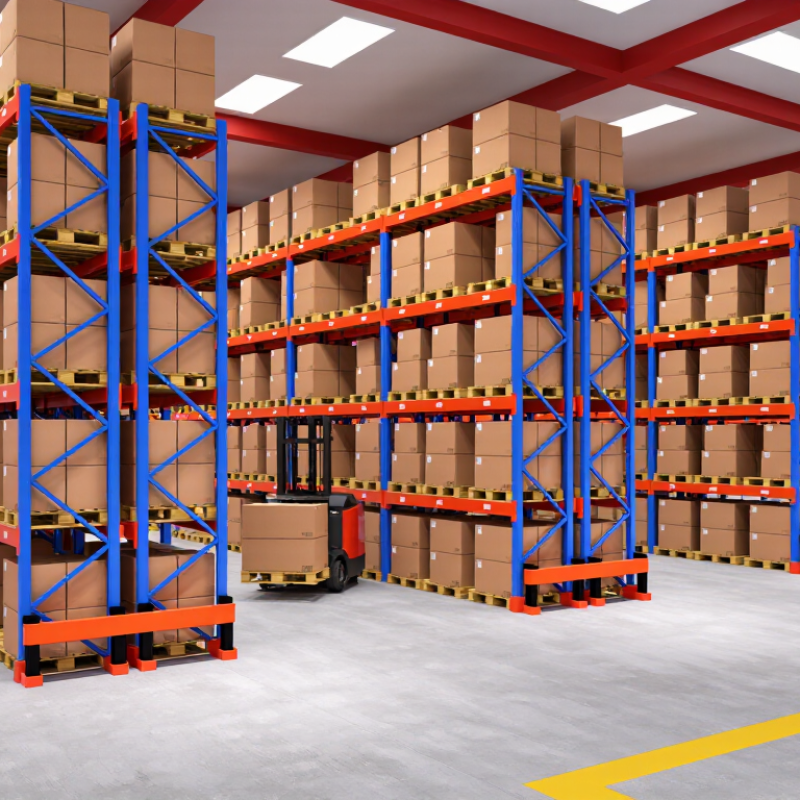
Pallet Shelving Market Scope: Load Ratings, Beam Sizes, and EN 15635 Criteria
China Top 10 Pallet Shelving Manufacturers for Global Buyers
Pallet shelving selection starts with the load, not the catalog image. Define pallet weight, dimensions, bay width, and storage height before comparing manufacturers. Load ratings must match the complete configuration, including beams, uprights, decking, and floor conditions. A beam rated for 2,000 kilograms may not support that load at every span or level. Ask for calculation sheets and tested data. Do not rely on a label alone.
Beam sizes influence both capacity and pallet clearance. Longer beams usually need deeper sections or stronger steel. Leave practical gaps between pallets, beams, and uprights for safe forklift movement. EN 15635 expects regular inspections, documented damage checks, and controlled repairs. It also requires competent personnel to assess risks and maintain storage equipment. In my experience, buyers often measure pallet weight accurately but overlook uneven loading. That mistake can distort real performance.
Tips: Request a layout drawing, load table, steel specification, and EN 15635 inspection guidance. Confirm whether ratings assume evenly distributed loads. Check the proposed system with your actual forklift and floor data. Small details matter.
A useful review should include production consistency, traceable materials, welding quality, coating thickness, and after-sales inspection support. These points are easy to miss. Yet reliability is built there. Even experienced teams should revisit assumptions when pallet types change.
China Top 10 Pallet Shelving Manufacturers for Global Buyers - Pallet Shelving Market Scope: Load Ratings, Beam Sizes, and EN 15635 Criteria
Anonymized comparison of representative China-based pallet-racking manufacturing profiles. The figures below describe common production ranges and engineering options available in the Chinese market; they are not company-specific claims or brand data.
| Rank | Anonymized Manufacturer Profile | Typical Product Scope | Common Beam Sizes (W × H, mm) |
Common Upright Sections (W, mm) |
Indicative Beam-Pair Load Rating | Typical Storage Levels | Surface Treatment | EN 15635 Criteria for Global Buyers | Operational Inspection Requirements | Buyer Verification Point |
|---|---|---|---|---|---|---|---|---|---|---|
| 1 | Profile A High-volume export |
Selective pallet racking for general warehouses, manufacturing plants, and distribution centers. | 80 × 50 90 × 50 100 × 50 |
80–100 mm Typical thickness: 1.8–2.5 mm |
2,000–3,000 kg per beam pair, subject to span, connector type, and frame height. | 2–5 beam levels | Powder-coated steel; galvanized components available for humid areas. | Design should consider EN 15635 operating principles, rack identification, safe working-load signage, protection against impact, and documented installation controls. | Routine visual checks by trained personnel; damage categories should be assessed using green, amber, and red action levels. | Request structural calculations for the exact pallet weight, beam span, bay width, floor condition, and seismic zone. |
| 2 | Profile B Heavy-duty systems |
Heavy-duty adjustable pallet racking for automotive parts, metal products, and industrial loads. | 100 × 50 110 × 50 120 × 50 |
90–110 mm Typical thickness: 2.0–2.8 mm |
3,000–4,500 kg per beam pair, depending on beam length and deflection limits. | 2–6 beam levels | Electrostatic powder coating with optional galvanized frame components. | EN 15635 requires safe use and maintenance procedures, competent-person inspection, protection of vulnerable rack members, and visible load notices. | Visual inspections should be scheduled according to risk; a technically competent expert inspection is generally arranged at intervals not exceeding 12 months. | Confirm the permissible beam deflection and whether the quoted capacity applies to uniformly distributed loads or specific pallet positions. |
| 3 | Profile C Long-span capability |
Wide-span pallet storage with reinforced beams for bulky goods and mixed pallet dimensions. | 110 × 50 120 × 50 140 × 50 |
90–110 mm Typical thickness: 2.0–2.5 mm |
2,500–4,000 kg per beam pair for common 2,700–3,600 mm beam lengths. | 2–4 beam levels | Powder-coated frames and beams; galvanized steel optional. | Rack configuration must be compatible with the intended load, handling equipment, aisle arrangement, floor tolerances, and impact-protection strategy. | Damaged components should be isolated or unloaded according to the applicable damage category, with repairs carried out only through an approved method. | Check beam connector locking devices, frame bracing, baseplates, anchors, and the actual clearances required by the forklift. |
| 4 | Profile D Cold-storage option |
Pallet racking adapted for chilled, frozen, and moisture-sensitive warehouse environments. | 90 × 50 100 × 50 120 × 60 |
80–100 mm Typical thickness: 2.0–2.5 mm |
2,000–3,500 kg per beam pair, subject to temperature, corrosion protection, and layout. | 2–5 beam levels | Hot-dip galvanized or enhanced powder-coated components. | EN 15635 operating controls should be supplemented by corrosion assessment, condensation management, suitable floor design, and low-temperature material suitability. | Inspection frequency should reflect higher corrosion, visibility, and impact risks in refrigerated environments. | Verify coating specification, steel grade, fastener protection, floor flatness, and whether the load rating has been adjusted for environmental conditions. |
| 5 | Profile E Automated warehouse support |
Rack structures for conveyor interfaces, shuttle systems, and automated storage layouts. | 100 × 50 120 × 60 140 × 60 |
90–120 mm Typical thickness: 2.0–3.0 mm |
2,500–5,000 kg per beam pair; exact values require system-specific engineering. | 3–8 beam levels | Precision powder coating; galvanized options for selected components. | EN 15635 principles apply to rack stability, safe operating conditions, component protection, load signage, and inspection documentation. | Inspection should cover rack geometry, guide rails, machine interfaces, anchoring, bracing, and any impact from automated equipment. | Request interface drawings, tolerances, rack plumbness limits, anchoring details, and combined loads from conveyors or storage machines. |
| 6 | Profile F Medium-duty flexibility |
Adjustable pallet racking for retail distribution, third-party logistics, and general commercial storage. | 80 × 50 90 × 50 100 × 50 |
70–90 mm Typical thickness: 1.5–2.2 mm |
1,500–2,800 kg per beam pair, depending on bay width and level spacing. | 2–5 beam levels | Powder-coated steel in standard industrial colors. | Safe working-load signs should state the relevant bay and level limits; unauthorized changes to beam levels or components should be prevented. | Routine checks should identify bent beams, damaged uprights, missing locking pins, displaced pallets, and overloaded levels. | Confirm that the quoted rating covers the complete rack bay rather than only an individual beam or connector. |
| 7 | Profile G High-rise storage |
Tall pallet racking for high-bay warehouses and facilities requiring high cubic utilization. | 100 × 50 120 × 60 140 × 60 160 × 60 |
100–120 mm Typical thickness: 2.5–3.5 mm |
3,000–5,000 kg per beam pair; building height and stability design are critical. | 4–10 beam levels | Powder coating with optional galvanized lower sections and accessories. | Design should address rack stability, floor capacity, anchorage, forklift impact, verticality, aisle safety, and documented operational controls. | Regular checks should include plumbness, anchor condition, bracing, floor settlement, impact damage, and changes to the original configuration. | Obtain a project-specific stability calculation, especially for tall frames, narrow aisles, wind exposure, or seismic locations. |
| 8 | Profile H Drive-in compatible |
High-density drive-in and drive-through pallet storage for homogeneous products. | 90 × 50 100 × 50 120 × 60 |
90–110 mm Typical thickness: 2.0–3.0 mm |
1,500–3,500 kg per pallet position; tunnel configuration affects capacity. | 2–6 pallet levels | Powder-coated or galvanized components depending on environment. | EN 15635 considerations include impact protection, forklift operating discipline, tunnel condition, load placement, and clear operating instructions. | Inspect guide rails, entry frames, pallet support rails, upright protectors, and damage caused by forklift entry or extraction. | Verify pallet quality, pallet dimensions, forklift type, tunnel depth, and the required first-in/last-out or first-in/first-out operating method. |
| 9 | Profile I Wide accessory range |
Pallet racks with wire decking, timber supports, pallet supports, back stops, guards, and safety accessories. | 80 × 50 100 × 50 120 × 50 140 × 50 |
80–110 mm Typical thickness: 1.8–2.8 mm |
2,000–4,000 kg per beam pair, subject to decking and support arrangement. | 2–6 beam levels | Powder-coated frames; galvanized mesh decking and accessories available. | Accessories must not reduce the designed capacity or interfere with beam connectors, pallet clearance, or safe load placement. | Check decking condition, support seating, missing clips, pallet overhang, back-stop clearance, and the condition of column guards. | Ask for the allowable distributed load and concentrated load of each decking type, not just the rack beam rating. |
| 10 | Profile J Project customization |
Custom-engineered pallet racking for irregular pallets, special load dimensions, and mixed warehouse applications. | 100 × 50 120 × 60 140 × 60 180 × 60 |
90–120 mm Typical thickness: 2.0–3.5 mm |
2,000–5,000 kg per beam pair; higher capacities require project-specific design validation. | 2–8 beam levels | Powder-coated, galvanized, or hybrid surface treatment. | Configuration changes, repairs, relocations, and extensions should be approved by a competent technical party and documented for safe continued use. | Inspection records should identify rack location, damage severity, corrective action, responsible person, and completion date. | Require stamped or signed calculations where applicable, installation drawings, component specifications, test documentation, and a maintenance manual. |
Important: Beam and upright load ratings are indicative engineering ranges, not universal guarantees. Actual capacity depends on steel grade, section geometry, beam span, frame height, bracing, connector design, pallet position, floor condition, anchorage, forklift impact, seismic requirements, and the complete rack configuration. Final selection should be confirmed by a qualified structural engineer and operated in accordance with EN 15635 principles.
Related Posts
-
Global Service and Excellence in Manufacturing the Best Teardrop Pallet Rack from China
-

Exploring the Unique Features and Applications of Best Pallet Rack Uprights for Global Buyers
-
How to Choose the Best Pallet Rack Uprights for Maximum Warehouse Efficiency
-
What is Pallet Racking and How Does it Benefit Your Business?
-
China Top 10 Warehouse Racking Manufacturers?
-

Maximizing Space and Efficiency with Warehouse Pallet Racks Benefits for Businesses